19 June 2026 | Eureka Place Hotel, Ntinda
A powerful story can bring hidden injustices to public attention and encourage action. But when that story involves a survivor, a human rights defender or a community facing risk, telling it requires more than finding the right words.
It requires care, informed consent and a commitment to do no harm.
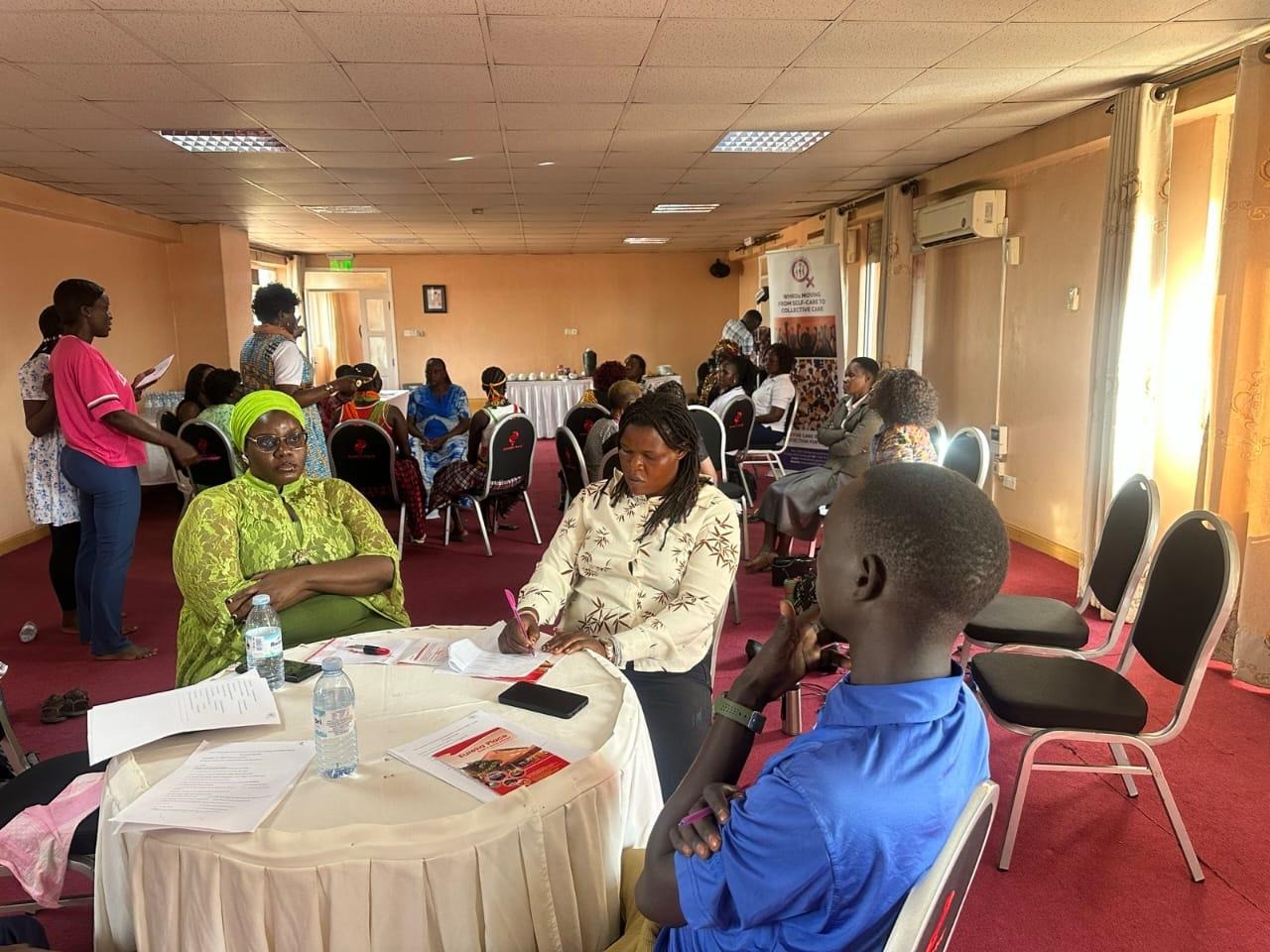
These principles were at the centre of a capacity-building workshop organised by the Women Human Rights Defenders Network Uganda (WHRDN-U) on 19 June 2026 at Eureka Place Hotel in Ntinda. The workshop brought together 20 women human rights defenders from across Uganda to strengthen their skills in ethical storytelling, advocacy messaging and documentary preparation.

Putting People Before the Story
Facilitated by WHRDN-U Protection Officer Prossy, the workshop explored what it means to tell stories while protecting the dignity and safety of the people involved.
For Robina, a woman human rights defender from Hoima, ethical storytelling means:
“Telling real stories in the way that protects dignity, consent and avoids harm.”
Participants discussed the importance of seeing people beyond the violations they have experienced. Rather than presenting someone only through their trauma, a story can also highlight their experience, resilience, the support they received and their journey towards justice.

The workshop also emphasised the “Do No Harm” principle, encouraging defenders to consider whether publishing a person’s identity, photograph, location or other information could expose them to further threats, stigma or retaliation.
Consent Must Be Informed
Participants were reminded that agreeing to share a personal experience does not automatically mean agreeing to have one’s photograph taken, appear on video or have one’s name published.
Consent should therefore be specific and informed, with individuals given the opportunity to decide how they want to be represented.
Where revealing someone’s identity could create risks, participants explored alternatives such as using an anonymous name or a non-identifying image.
For women human rights defenders documenting sensitive issues, these considerations are essential to ensuring that advocacy does not unintentionally create further harm.
Stories as Tools for Change
The training also explored the role of storytelling in advocacy.
Participants reflected on how well-told stories can make hidden violations visible, influence policymakers, document lived experiences and encourage others to speak out.

Issues discussed included maternal healthcare, environmental degradation, land grabbing, domestic violence and harmful practices.
The focus was not simply on telling compelling stories, but on telling stories responsibly and strategically so that the experiences of individuals can contribute to wider public understanding and social change without compromising their safety.
Preparing Defenders for the Camera
The final part of the workshop focused on documentary and filming preparation.
Participants discussed how to prepare for interviews, understand the message they want to communicate and consider the filming environment.
Importantly, preparation also included assessing personal and community risks before appearing on camera.
Questions such as whether a defender’s face or real name should be used, whether filming could expose family members or communities to risk, and whether the location is safe were considered part of the storytelling process.

Four women human rights defenders;Viola, Maureen, Mercy and Robina expressed readiness to participate among the first women to be documented. WHRDN-U will coordinate the process and provide technical guidance to ensure that participants are appropriately prepared and protected.
Stories Told With Care
By the end of the workshop, participants had strengthened their understanding of dignity, informed consent, confidentiality and the “Do No Harm” approach, while gaining practical skills for documentary interviews and advocacy storytelling.
For WHRDN-U, the training reinforces an important principle: human rights storytelling should amplify people’s voices without putting them at unnecessary risk.
Because sometimes the most powerful story is not the one that reveals the most it is the one that tells the truth with the greatest care.