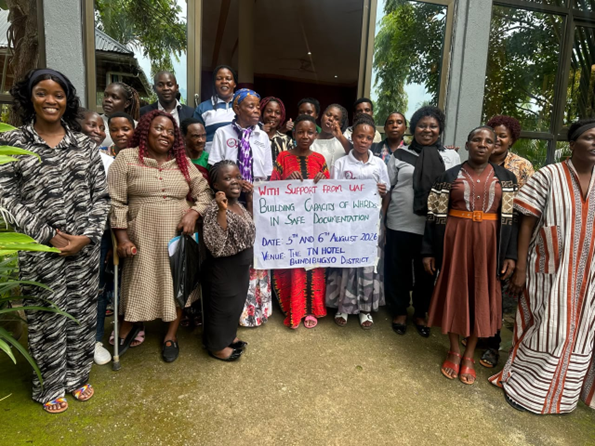
Bundibugyo District | 5–6 August 2026
For women human rights defenders, speaking up about violations can be difficult. For Batwa women facing discrimination because of their identity, accessing services, opportunities and justice can bring additional challenges.
Creating a safe space to speak, learn and build solidarity was at the heart of a two-day regional meeting convened by the Women Human Rights Defenders Network Uganda (WHRDN-U) in Bundibugyo on 5–6 August 2026.
The meeting brought together 20 women human rights defenders from Bundibugyo, Kasese, Kabale, Kisoro and Kabarole to strengthen their skills in documenting and reporting human rights violations, while building connections with local support structures.
Creating Space for Women to Speak
The meeting opened with an opportunity for participants to reflect on what they were bringing into the space and what they hoped to gain. They spoke of care, friendship, solidarity and a willingness to share experiences.

These values shaped the discussions that followed, particularly as Batwa women shared experiences of discrimination in accessing healthcare, education and other opportunities.
The meeting also brought together women defenders working on issues including gender-based violence, disability rights, child rights and sexual rights, broadening the conversation around the different forms of exclusion women may face.

When Discrimination Affects Access to Healthcare
On the second day, Batwa women human rights defenders shared personal experiences of discrimination in health facilities.
Edreda, one of the participants, described feeling that Batwa patients were treated differently, saying: “Doctors work on those with money, they pass us even when we came in first, they say we smell.”
Annet Mutwa also shared an experience in which she said her brother was denied treatment because of their Batwa identity.
Participants noted that these experiences demonstrate that access to healthcare is not only about having services available. It is also about being treated with dignity and without discrimination.
They called for greater attention to culturally appropriate health information and suggested the involvement of Batwa Village Health Teams who understand the community and can help bridge gaps in access and communication.
Connecting Defenders to Local Support
The meeting also created an opportunity for direct engagement between women human rights defenders and local government.
Mr. Baguma Robert, Clerk to Council and Gender Focal Person at the Bundibugyo District Community Development Office, recognised the work of women defenders and encouraged them to continue reporting violations so that relevant authorities can follow up.
He also highlighted existing opportunities for the Batwa community to engage with the Uganda Wildlife Authority and encouraged continued collaboration between communities, government structures and human rights defenders.

For WHRDN-U, such connections are important in ensuring that women defenders know where to seek support and that concerns raised at community level can reach relevant duty bearers.
Speaking Up, Documenting and Acting
A key message throughout the meeting was the importance of early documentation and reporting.
Kimpaye Kellen, a Batwa woman human rights defender from Kisoro, shared experiences similar to those raised by women in Bundibugyo and encouraged them to speak up.
Participants were reminded that documenting violations can help ensure that cases are followed up and that patterns of discrimination and other abuses are not left invisible.

The meeting also identified 17 additional active women human rights defenders across the region for further engagement, including defenders working with communities experiencing multiple forms of marginalisation.
Building Solidarity Beyond the Meeting
The meeting concluded with practical steps to sustain the connections established.
WHRDN-U and regional defenders agreed to continue creating safe spaces for peer learning and strengthen women’s capacity to document and respond to violations early. Plans were also made for quarterly mentorship of Batwa women defenders in Bundibugyo and an exchange visit to Kisoro to strengthen learning and collaboration.
Participants also committed to identifying defenders experiencing multiple forms of discrimination and connecting them to appropriate support and networks.

The Bundibugyo meeting demonstrated that protection begins with creating spaces where women feel safe enough to speak and ensuring that those voices can lead to action.
For Batwa women human rights defenders, building that confidence, strengthening their connections and ensuring that their experiences are heard are important steps towards a more inclusive and responsive human rights movement.