RETHINKING LEADERSHIP: WOMEN HUMAN RIGHTS DEFENDERS BUILD SOLIDARITY IN WEST NILE

17–18 August 2026 | Yumbe District

What does feminist leadership look like in practice? Who gets to speak, who gets heard, and who gets included when decisions are being made?

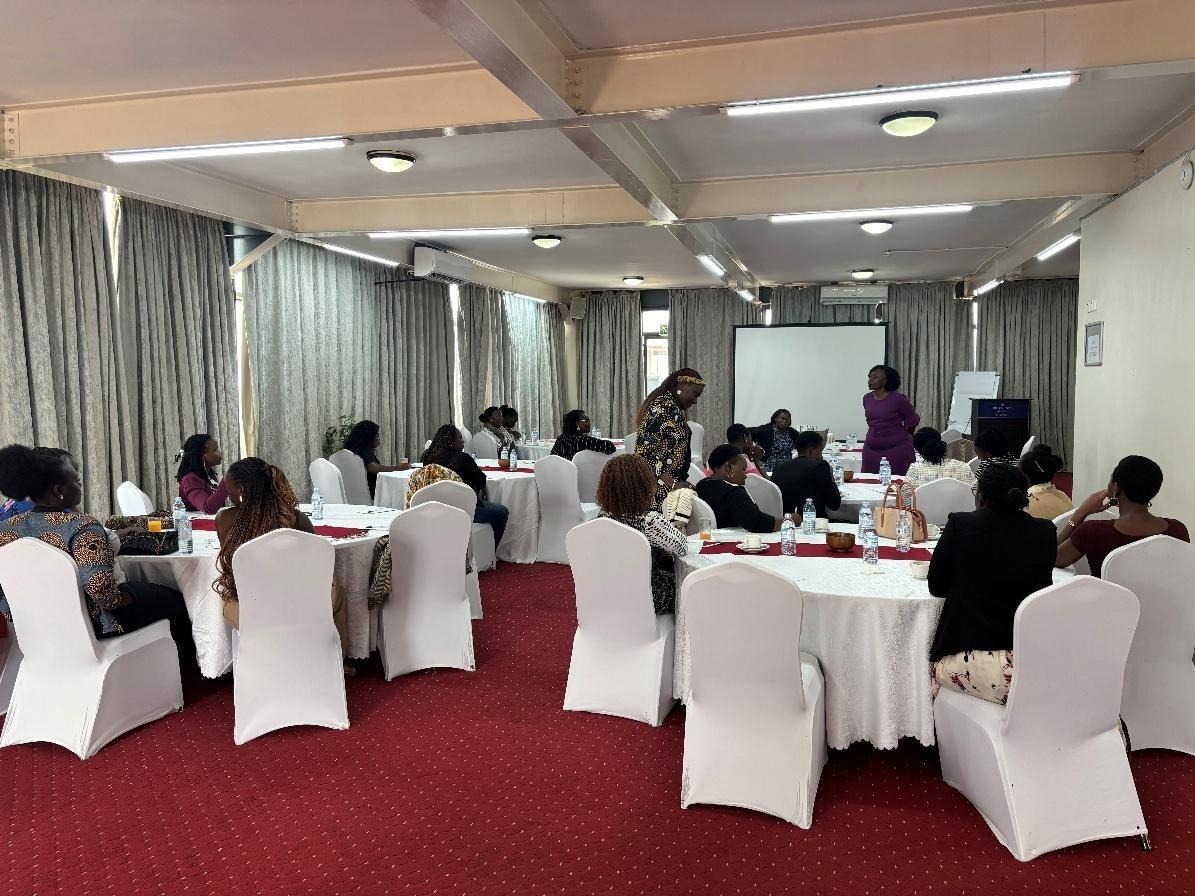
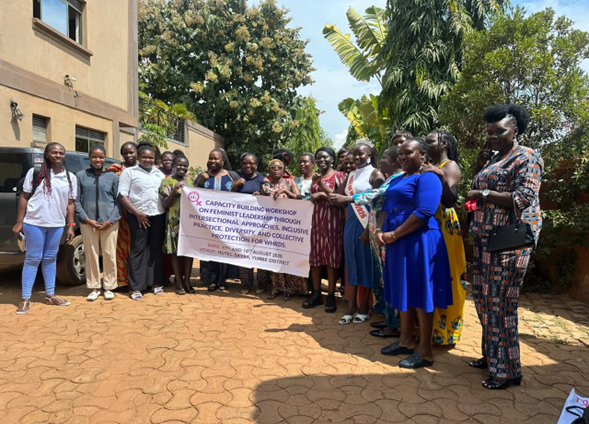
These questions shaped a two-day regional training organised by the Women Human Rights Defenders Network Uganda (WHRDN-U) for 25 women human rights defenders from across West Nile on 17–18 August 2026 in Yumbe District.

The training explored feminist leadership, intersectionality and collective protection, while creating space for women defenders to reflect on inclusion, self-care and the different risks they experience because of who they are and the communities they work in. 

Participants explored feminist leadership through the principles of equity, shared power, inclusion and accountability.

Rather than seeing leadership primarily as authority over others, the discussion focused on creating opportunities, sharing decision-making and ensuring that people whose voices are often overlooked can participate meaningfully.

Participants shared examples from their own organisations, including approaches that rotate responsibilities and create opportunities for women from different organisations to work together.

One message emerged strongly: leadership is not only about holding power, but about using it to create space for others.

The conversation became particularly powerful when participants reflected on the principle of “nothing without us.”

Women defenders acknowledged that organisations can sometimes speak on behalf of marginalised groups without sufficiently involving them in decisions that affect their lives.

Mercy, a participant, captured the shift in thinking: “Recently we have also changed from ‘Nothing for us, without us’ to ‘Nothing without us’.”

For participants, meaningful inclusion means more than inviting marginalised people into a room. It means ensuring they have a voice in the decisions, opportunities and platforms that concern them.

Participants also explored intersectionality; how different aspects of a person’s identity and circumstances can combine to shape their experiences and risks.

Through practical case studies, they considered the realities of a rural environmental defender, a woman defender with a disability documenting election violence, and a young digital activist facing online harassment.

The discussions showed that women defenders do not experience risk in the same way.

Location, age, disability, economic circumstances, social status and the issues a defender works on can all affect both vulnerability and access to support.

Hadija, a young activist from Moyo, shared her experience of cyberbullying and abusive messages on TikTok, highlighting how online attacks can add another layer of risk for women who speak publicly about human rights.

For participants, the lesson was clear: protection must respond to the individual realities of each defender.

The training also created space for participants to reflect on self-care and collective care.

Women shared simple ways of supporting their wellbeing, including taking time to rest, walk, connect with colleagues and create space away from the pressures of their work.

But collective care also means checking on one another, sharing information and offering support when a colleague is struggling.

The women reflected on previous experiences where defenders came together to raise awareness and support colleagues facing threats demonstrating how solidarity can become a practical form of protection.

Participants committed to strengthening peer support and incorporating self-care into their organisational practices. WHRDN-U will continue providing protection support, creating regional and national learning opportunities and facilitating joint advocacy and networking among defenders.

Plans were also made for a self-care and collective healing session in Adjumani and continued efforts to connect marginalised groups to appropriate support and opportunities. 

The Yumbe training offered a broader understanding of what feminist leadership can mean: sharing power, making room for others, recognising different experiences and ensuring that no defender has to navigate challenges alone.

For the women human rights defenders of West Nile, that work begins with something simple but powerful, listening to one another, standing together and making sure every voice has a place.
INDIGENOUS WOMEN PUT THEIR VOICES AT THE CENTRE OF CONSERVATION DIALOGUE IN BUNDIBUGYO

Bundibugyo District | 7 August 2026

For Indigenous communities, forests are more than places to conserve. They are connected to history, culture, livelihoods, identity and generations of knowledge.

But as conservation and tourism continue to shape how natural resources are managed, Indigenous women are asking an important question: How can they have a meaningful voice in decisions affecting their communities, culture and natural heritage?

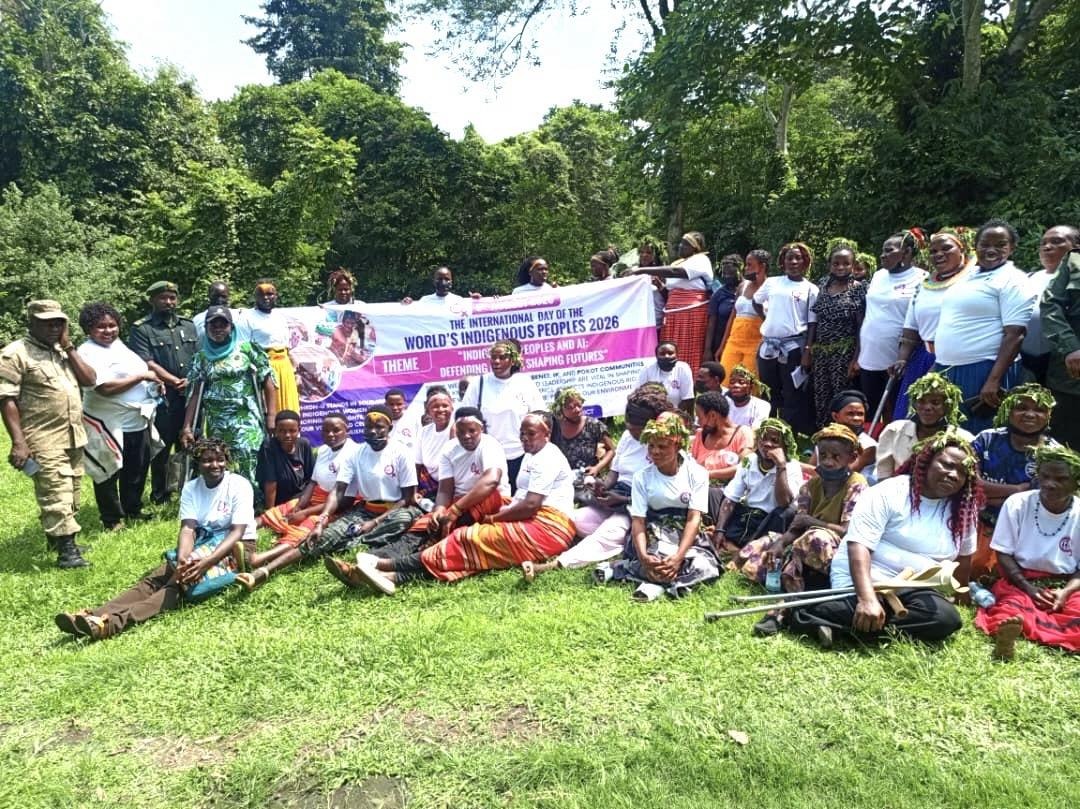
This question took centre stage on 7 August 2026 when the Women Human Rights Defenders Network Uganda (WHRDN-U) brought together 22 representatives of Indigenous communities and women human rights defenders from across Uganda for a commemoration of the International Day of the World’s Indigenous Peoples at the Uganda Wildlife Authority (UWA) offices in Semliki, Bundibugyo. Representatives from the Batwa, Ik, Pokot and Benet communities participated alongside UWA officials. 

The gathering provided more than an opportunity to celebrate Indigenous culture. It created a space for Indigenous women to share experiences and engage directly with UWA on issues affecting their communities.

Opening the engagement, WHRDN-U Team Leader Brenda Kugonza emphasised that recognising Indigenous culture should go beyond commemorating it on a single day. She called for Indigenous knowledge, culture and relationships with nature to be recognised and protected, while ensuring that conservation and the rights and dignity of Indigenous communities are treated as complementary.

The Batwa’s long-standing relationship with forests such as Bwindi and Semliki was central to the discussion. Their stories, language, traditional knowledge and cultural practices, participants noted, can also contribute to conservation, education and tourism.

The strongest moments came as women human rights defenders engaged UWA directly.

Alice Nyamihanda from Kisoro asked about support for Batwa women to document and preserve traditional ecological knowledge. UWA shared that a book documenting Batwa cultural practices, traditional knowledge and herbal medicines had been developed and was awaiting translation into the Lutwa language, subject to the necessary permissions.

The discussion highlighted an important principle: preserving Indigenous knowledge must not mean taking ownership of it. Indigenous communities should have a meaningful say in how their knowledge is documented, represented and shared.

Auma Maureen from Kasese asked whether Batwa women could participate as conservation guides and cultural educators.

While UWA explained that formal qualifications can limit access to some positions, the discussion opened up another possibility: recognising the knowledge Indigenous women already possess as an asset. Their oral histories, understanding of nature and cultural knowledge can provide a valuable foundation for roles in cultural tourism and conservation education.

Viola Kusuro from the Benet community also asked about Indigenous representation in UWA conservation structures, while Mulhambira Dinah from Kasese raised questions about tourism enterprises and whether communities would benefit from tourism and park revenues. 

UWA shared several initiatives aimed at supporting community participation, including livelihood training, provision of 60 beehives to the Batwa on a trial basis, and the Batwa Trail, which provides an opportunity for members of the community to share their history and culture with visitors.

A visitor and exhibition centre was also under construction with support from the World Bank, with plans for it to showcase Batwa cultural materials, crafts and traditional knowledge.

For Indigenous communities, however, participation must mean more than being included in programmes.

It must also involve ownership, decision-making and tangible benefits from opportunities connected to their culture and natural heritage.

This was reflected in discussions around proposals for tourism and park revenue to benefit the Batwa community and the need to ensure that Indigenous people have a meaningful role in determining how their culture is presented to visitors.

Bringing together representatives of the Batwa, Benet, Ik and Pokot communities also created an opportunity to recognise shared concerns around cultural preservation, livelihoods, participation and access to opportunities.

For the women human rights defenders involved, the engagement strengthened connections between Indigenous communities and created a foundation for continued learning and collective advocacy.

WHRDN-U will continue engaging UWA on issues raised during the meeting, including opportunities for Indigenous participation in tourism and conservation and proposed revenue-sharing arrangements. The Network will also strengthen connections among Indigenous women defenders from the different communities. 

The gathering offered a simple but important reminder: Indigenous women should not only be represented in conversations about their communities they should help shape those conversations.

Their knowledge, culture and leadership are not obstacles to conservation. They are part of what makes conservation meaningful and sustainable.

FROM SILENCE TO SPEAKING UP: BATWA WOMEN HUMAN RIGHTS DEFENDERS STRENGTHEN THEIR VOICES IN BUNDIBUGYO

Bundibugyo District | 5–6 August 2026

For women human rights defenders, speaking up about violations can be difficult. For Batwa women facing discrimination because of their identity, accessing services, opportunities and justice can bring additional challenges.

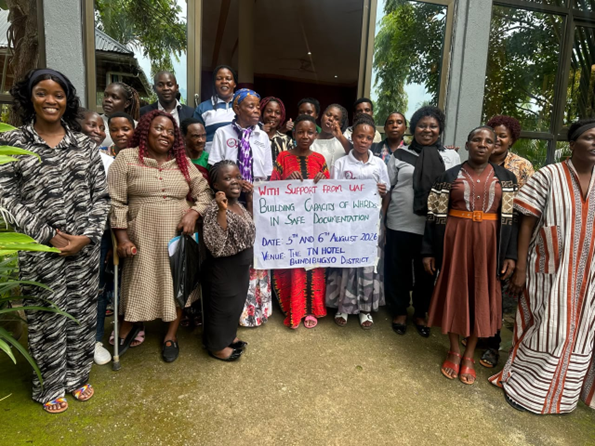
Creating a safe space to speak, learn and build solidarity was at the heart of a two-day regional meeting convened by the Women Human Rights Defenders Network Uganda (WHRDN-U) in Bundibugyo on 5–6 August 2026.

The meeting brought together 20 women human rights defenders from Bundibugyo, Kasese, Kabale, Kisoro and Kabarole to strengthen their skills in documenting and reporting human rights violations, while building connections with local support structures. 

The meeting opened with an opportunity for participants to reflect on what they were bringing into the space and what they hoped to gain. They spoke of care, friendship, solidarity and a willingness to share experiences.

These values shaped the discussions that followed, particularly as Batwa women shared experiences of discrimination in accessing healthcare, education and other opportunities.

The meeting also brought together women defenders working on issues including gender-based violence, disability rights, child rights and sexual rights, broadening the conversation around the different forms of exclusion women may face.

On the second day, Batwa women human rights defenders shared personal experiences of discrimination in health facilities.

Edreda, one of the participants, described feeling that Batwa patients were treated differently, saying: “Doctors work on those with money, they pass us even when we came in first, they say we smell.”

Annet Mutwa also shared an experience in which she said her brother was denied treatment because of their Batwa identity.

Participants noted that these experiences demonstrate that access to healthcare is not only about having services available. It is also about being treated with dignity and without discrimination.

They called for greater attention to culturally appropriate health information and suggested the involvement of Batwa Village Health Teams who understand the community and can help bridge gaps in access and communication. 

The meeting also created an opportunity for direct engagement between women human rights defenders and local government.

Mr. Baguma Robert, Clerk to Council and Gender Focal Person at the Bundibugyo District Community Development Office, recognised the work of women defenders and encouraged them to continue reporting violations so that relevant authorities can follow up.

He also highlighted existing opportunities for the Batwa community to engage with the Uganda Wildlife Authority and encouraged continued collaboration between communities, government structures and human rights defenders.

For WHRDN-U, such connections are important in ensuring that women defenders know where to seek support and that concerns raised at community level can reach relevant duty bearers.

A key message throughout the meeting was the importance of early documentation and reporting.

Kimpaye Kellen, a Batwa woman human rights defender from Kisoro, shared experiences similar to those raised by women in Bundibugyo and encouraged them to speak up.

Participants were reminded that documenting violations can help ensure that cases are followed up and that patterns of discrimination and other abuses are not left invisible.

The meeting also identified 17 additional active women human rights defenders across the region for further engagement, including defenders working with communities experiencing multiple forms of marginalisation. 

The meeting concluded with practical steps to sustain the connections established.

WHRDN-U and regional defenders agreed to continue creating safe spaces for peer learning and strengthen women’s capacity to document and respond to violations early. Plans were also made for quarterly mentorship of Batwa women defenders in Bundibugyo and an exchange visit to Kisoro to strengthen learning and collaboration.

Participants also committed to identifying defenders experiencing multiple forms of discrimination and connecting them to appropriate support and networks. 

The Bundibugyo meeting demonstrated that protection begins with creating spaces where women feel safe enough to speak and ensuring that those voices can lead to action.

For Batwa women human rights defenders, building that confidence, strengthening their connections and ensuring that their experiences are heard are important steps towards a more inclusive and responsive human rights movement.

STRENGTHENING LEGAL AWARENESS AMONG WOMEN HUMAN RIGHTS DEFENDERS

13 July 2026 | Arch Apartments and Hotel, Ntinda

For women human rights defenders and civil society organisations, understanding the legal environment in which they operate is increasingly important. Knowing their obligations can help organisations identify risks, strengthen internal systems and continue their work responsibly.

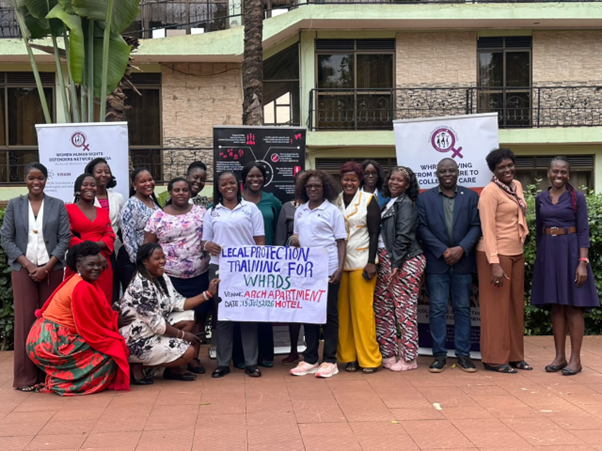
On 13 July 2026, the Women Human Rights Defenders Network Uganda (WHRDN-U) brought together staff, women human rights defenders and civil society representatives for a legal awareness and capacity-building training at Arch Apartments and Hotel in Ntinda. The training focused on the Protection of Sovereignty Act, 2026, organisational compliance and tax obligations. It was facilitated by legal expert and Chapter Four Uganda Executive Director Anthony Masake. 

Participants explored key provisions of the Protection of Sovereignty Act, including registration requirements, regulated activities and other obligations that may affect civil society organisations.

The discussion also considered how the law intersects with everyday organisational work, including advocacy, community mobilisation, partnerships and public communication.

Participants were encouraged to go beyond simply maintaining valid registration documents and review their organisational materials including governing documents, websites, strategic plans and communication materials to ensure they accurately reflect their mandates and current legal requirements. 

For Rose Kahunde, a woman human rights defender from Kasese, the changing environment is already creating concern. “I am worried, I thought that CSOs are safe, in my district, NGO bureau has started asking for registration licenses, investigating organizations on what they do.”

Her concern reflected a broader need for organisations to understand their obligations and seek appropriate guidance rather than operate from uncertainty.

The training encouraged participants to see compliance as an ongoing organisational responsibility rather than something addressed only when problems arise.

Robina, a woman human rights defender from Hoima, said the training had prompted her to reconsider her organisation’s documents:

Participants were also encouraged to establish clear internal processes for responding to requests for information from regulators and to seek legal guidance where necessary.

The discussion reinforced a simple message: being legally prepared requires more than having documents—it requires organisations to understand how their work, systems and communication fit within the applicable legal framework.

The training also addressed tax compliance, including tax exemption applications, filing requirements, PAYE, withholding tax and taxation of unrelated business income.

Participants were reminded that NGO registration does not automatically remove all tax obligations and that organisations need to maintain accurate financial and statutory records.

Emily from Arua shared an example of an organisation that had failed to meet its filing obligations and subsequently had to change its name. “They had to rebrand to another name yet they had received funding to implement a project.”

The experience highlighted how seemingly administrative gaps can affect organisational continuity and public trust. 

Importantly, the training did not present compliance as giving up advocacy.

Instead, participants were encouraged to understand the rules governing their work, identify potential risks and take informed steps to remain operational and effective.

As one of the key messages from the training put it: “Compliance is not surrender.”

WHRDN-U will continue linking defenders requiring additional support to appropriate legal guidance, while participants committed to reviewing their organisational systems, strengthening statutory compliance and sharing the knowledge gained with other organisations and defenders in their communities. 

For Jackie, a woman human rights defender from Yumbe, that commitment extends beyond the training room:

“I will map all sister organizations in the district and give them the important information I have received so that they do not risk closure.”

The training ultimately demonstrated that legal awareness can be an important part of organisational resilience. For women human rights defenders and the organisations supporting them, being informed, prepared and compliant can help create the space needed to continue advancing human rights and supporting communities.

STANDING UP FOR SURVIVORS: BUILDING SAFETY AND SOLIDARITY AMONG GBV RESPONDERS

25 June 2026 | Arch Apartments and Hotel, Ntinda

For women working at the frontline of gender-based violence (GBV), supporting survivors can sometimes come at a personal cost. Responders may face intimidation, threats, stigma and violence simply for speaking up for another woman.

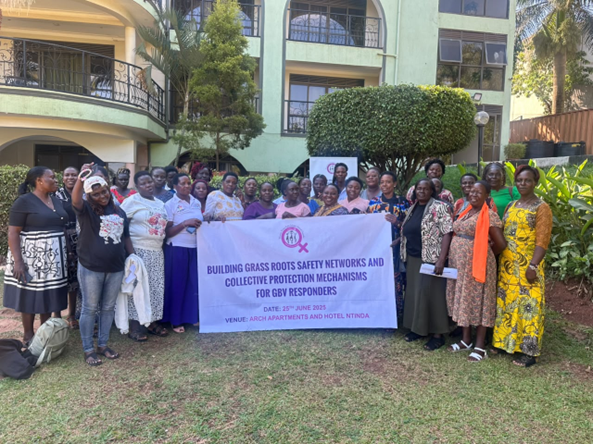
On 25 June 2026, the Women Human Rights Defenders Network Uganda (WHRDN-U) brought together 30 GBV responders from different parts of Uganda for a one-day training focused on building grassroots safety networks and collective protection mechanisms. The engagement also introduced participants to WHRDN-U and its work to protect and support women human rights defenders. 

The meeting created space for participants to share experiences and reflect on the risks associated with GBV response and advocacy.

Juliet from Palisa spoke about facing intimidation from members of her own family after defending her brother’s widow, who was at risk of losing her marital home.

Biira from Kasese shared how she was threatened after advocating for a 14-year-old girl with a disability who had become pregnant. Anna from Tororo also described being evicted from her home after supporting a tenant experiencing sexual harassment.

Their experiences highlighted that GBV responders can face hostility not only from perpetrators, but also from family and community members who view their advocacy as interference.

Paulina, a woman human rights defender from Amudat, shared one of the most powerful testimonies of the day.

An advocate against child marriage and female genital mutilation (FGM), Paulina said members of her community killed her cattle after she provided shelter to girls who had escaped FGM and forced child marriage.

The loss affected both her livelihood and her ability to continue supporting the girls.

“The Network supported me with one cow after the community ganged against me and killed all my cattle because I was protecting girls who had run away from FGM and child marriage.”

The cow has since produced two more, helping her rebuild her livelihood.

“I am very grateful to the Network because that support helped me rebuild my livelihood while continuing my work.”

Her experience demonstrated that protection for human rights defenders can sometimes require more than responding to immediate threats. It can also mean helping defenders recover from retaliation so they can continue their work. 

Participants explored practical ways of supporting survivors and responding to threats against defenders, including referrals, counselling, case management and connections to relevant protection services.

The discussions also emphasised the importance of both online and offline security, self-care and collective care.

For many participants, one of the most valuable outcomes was the opportunity to connect with other women doing similar work. Several described leaving with a new “sister” they could remain connected to and support beyond the training.

This sense of connection is central to the grassroots safety networks WHRDN-U is seeking to strengthen networks where defenders can share information, make referrals and respond collectively when someone faces a threat.

WHRDN-U will continue engaging the responders through mentorship, regional meetings and networking opportunities, while a follow-up training will focus on mapping community support structures, strengthening referral pathways and developing collective protection mechanisms.

Participants committed to continuing their GBV response work, documenting violations, maintaining communication with fellow defenders and referring other defenders to WHRDN-U where support is needed. Two cases involving threats and violations against women defenders from Palisa and Kasese were also documented during the engagement. 

The meeting marked an important first step in connecting grassroots GBV responders to a wider protection network.

Because the women who stand up for survivors should not have to stand alone.

PROTECTING THOSE WHO PROTECT OTHERS: WOMEN HUMAN RIGHTS DEFENDERS REFLECT ON ELECTION RISKS

9 March 2026 | Eureka Place Hotel, Ntinda, Kampala

During elections, much of the public attention focuses on candidates, voters and polling stations. Less visible are the women working in communities to promote civic participation, monitor elections, advocate for peaceful processes and document human rights concerns.

Yet these women can also face intimidation and threats because of the work they do.

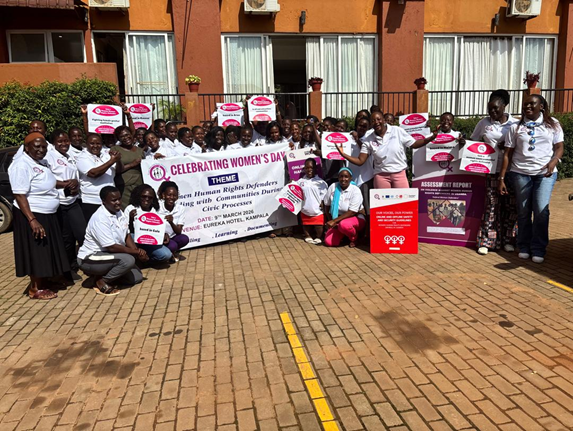
On 9 March 2026, the Women Human Rights Defenders Network Uganda (WHRDN-U) brought together 25 women human rights defenders from Eastern, Western, Northern, Central and Karamoja regions for a day of reflection, learning and wellness following Uganda’s 2026 elections. The engagement focused on strengthening documentation, collective protection and the wellbeing of women defenders. 

The engagement provided space for women defenders to reflect on the rights at stake during elections, including freedom of expression, participation, security, access to information and the right to vote.

Hope Bagota from the Uganda Human Rights Commission (UHRC) led a session on monitoring and documentation, emphasising the importance of recording incidents objectively and supporting them with evidence such as photographs, dates, locations, police reference numbers and relevant media reports.

Participants were introduced to the Five Ws and H what, where, when, who, why and how as a practical framework for documenting violations.

For the defenders, the lesson was clear: documentation can turn individual experiences into credible evidence that supports advocacy and accountability. 

Participants also shared experiences from the election period that demonstrated the risks associated with their work.

Leese Josephine from Nakapiripirit described facing intimidation while conducting civic and voter education. Amiya Shannon said security agents at a polling station in Moroto forced her to hand over her phone and delete photographs she had taken before she left the station for her safety.

In Yumbe, Eudopia Jackline described receiving a threatening call during a radio talk show on gender equality and peaceful coexistence. In another case shared during the meeting, a woman defender in Arua reportedly faced verbal attacks and gender-based violence at home linked to her civic engagement.

These experiences highlighted a difficult reality: women encouraging others to participate in civic processes can themselves become targets because of their work. 

The meeting also resulted in two cases involving WHRDs from Palisa and Kasese being interviewed and documented for WHRDN-U‘s evidence base on attacks and violations. 

After reflecting on the risks they had experienced, participants turned their attention to their own wellbeing.

WHRDN-U Executive Director Brenda Kugonza encouraged the women to think about how often they make time for themselves through rest, exercise, health check-ups and other forms of self-care.

A wellness session, including activities such as massage, steam baths and body scrubs, gave participants an opportunity to relax and reconnect after the pressures of election-related work.

The session reinforced an important message: self-care is not separate from human rights work. For defenders regularly exposed to conflict, violence and discrimination, maintaining their physical and emotional wellbeing is part of sustaining their work.

The engagement also strengthened connections among defenders from different parts of the country and provided an opportunity to connect them with the Uganda Human Rights Commission and its regional offices for reporting and complaints.

At the same time, the discussions revealed a need for continued mentorship, as many defenders had not consistently documented eligible cases despite receiving guidance and support. 

WHRDN-U will continue supporting defenders to strengthen documentation, collective protection and peer networks, while working with relevant human rights institutions to ensure that violations affecting women defenders are captured in broader accountability processes.

The experiences shared during the engagement offer a simple but important reminder: the women who stand up for the rights of others also need protection, support and space to recover.

Protecting women human rights defenders is therefore part of protecting the civic space in which communities can participate, speak freely and demand accountability.

WHEN THE WORK STOPS, THE NEED FOR SUPPORT CONTINUES

23 February 2026 | Protea Skyz Hotel, Naguru, Kampala

When a civil society organisation is suspended, the impact goes beyond closing an office or interrupting programmes. For the women human rights defenders working within these organisations, it can mean uncertainty about livelihoods, family responsibilities, personal safety and their ability to continue serving their communities.

On 23 February 2026, the Women Human Rights Defenders Network Uganda (WHRDN-U) brought together 25 women human rights defenders affected by organisational suspensions for a day of reflection, psychosocial support and solidarity at Protea Skyz Hotel in Naguru, Kampala. 

The meeting created a safe space for participants to openly reflect on the challenges they were experiencing and consider how they could navigate the uncertainty together.

For some, the suspensions had affected their ability to continue their education or meet family responsibilities. Others spoke about the emotional strain of losing employment or living with uncertainty about what would come next.

As facilitator Sheila Muwanga observed: “Some of us end up feeling alone and our burdens are heavy.”

The statement captured a shared experience among women who had spent much of their professional lives supporting others but were now themselves in need of support.

Participants also reflected on risks they had experienced because of their human rights work.

Praise Aloikin described living with prolonged fear and having to relocate for safety, while others expressed concern about how the suspension of their organisations could affect their future employment and professional lives.

The discussions highlighted that the challenges facing women human rights defenders do not necessarily end when an organisation stops operating. In some cases, organisational uncertainty can deepen existing vulnerabilities.

For this reason, participants discussed the importance of maintaining trusted networks, knowing where to seek protection and continuing to check in on one another.

Counsellor Ruth from Healing Talking Uganda guided participants through conversations on stress, trauma and coping.

The session encouraged the women to recognise that seeking support is not a sign of weakness and that caring for their own wellbeing is important to sustaining their work.

Participants were also encouraged to identify new skills and explore alternative ways of generating income while navigating the uncertainty.

WHRDN-U provided emergency financial support to some participants to help address immediate needs affecting them and their families. 

This combination of psychosocial and practical support reflected a broader understanding of protection, one that recognises that defenders may need emotional, social and economic support alongside traditional security mechanisms.

Despite the difficult circumstances, participants also spoke about the importance of staying connected.

Women shared how they continued checking on one another through phone calls and WhatsApp and offering support during difficult moments.

For Ritah, the support from WHRDN-U also helped demonstrate to affected families that their mothers were not facing the situation alone. 

The meeting ultimately showed that when formal organisational structures are disrupted, relationships and solidarity can become an important source of strength and protection.

WHRDN-U will continue creating spaces where women human rights defenders can access psychosocial support, share experiences and explore practical ways of building resilience.

The experience also offers a simple reminder: the women who spend their lives standing up for others also need spaces where others can stand with them.