RETHINKING LEADERSHIP: WOMEN HUMAN RIGHTS DEFENDERS BUILD SOLIDARITY IN WEST NILE

17–18 August 2026 | Yumbe District

What does feminist leadership look like in practice? Who gets to speak, who gets heard, and who gets included when decisions are being made?

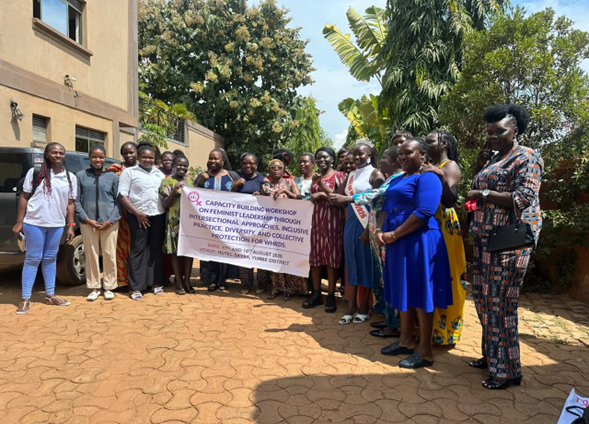
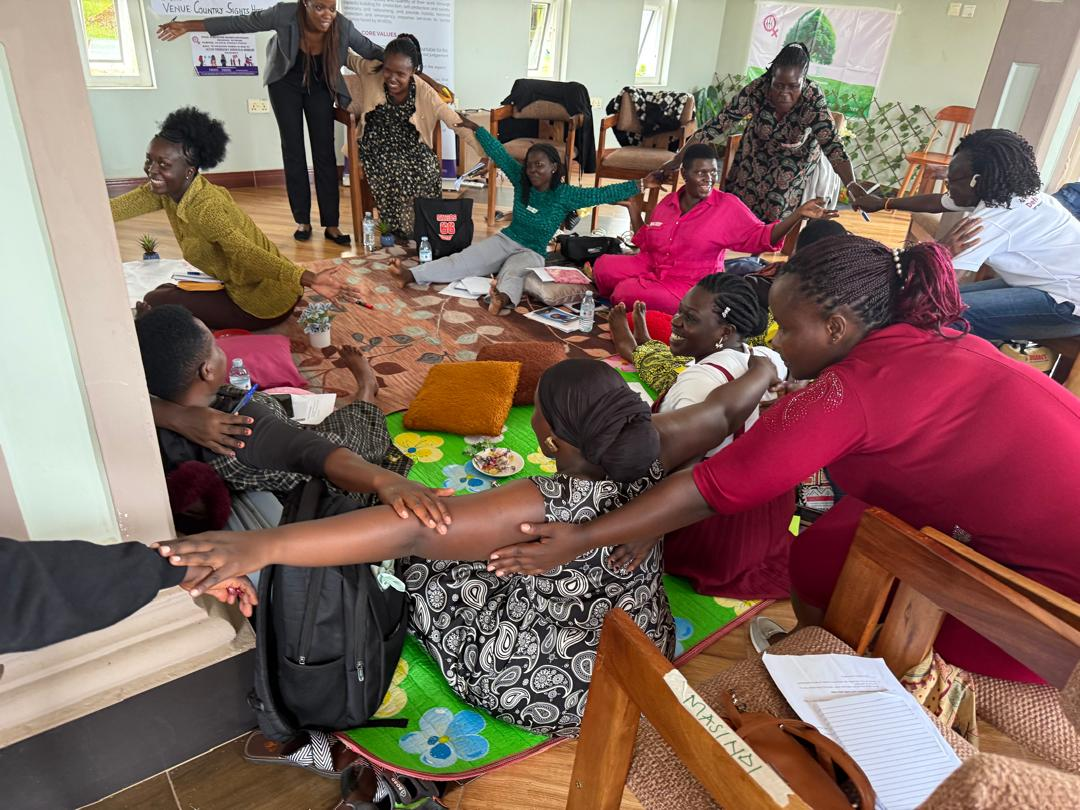
These questions shaped a two-day regional training organised by the Women Human Rights Defenders Network Uganda (WHRDN-U) for 25 women human rights defenders from across West Nile on 17–18 August 2026 in Yumbe District.

The training explored feminist leadership, intersectionality and collective protection, while creating space for women defenders to reflect on inclusion, self-care and the different risks they experience because of who they are and the communities they work in. 

Participants explored feminist leadership through the principles of equity, shared power, inclusion and accountability.

Rather than seeing leadership primarily as authority over others, the discussion focused on creating opportunities, sharing decision-making and ensuring that people whose voices are often overlooked can participate meaningfully.

Participants shared examples from their own organisations, including approaches that rotate responsibilities and create opportunities for women from different organisations to work together.

One message emerged strongly: leadership is not only about holding power, but about using it to create space for others.

The conversation became particularly powerful when participants reflected on the principle of “nothing without us.”

Women defenders acknowledged that organisations can sometimes speak on behalf of marginalised groups without sufficiently involving them in decisions that affect their lives.

Mercy, a participant, captured the shift in thinking: “Recently we have also changed from ‘Nothing for us, without us’ to ‘Nothing without us’.”

For participants, meaningful inclusion means more than inviting marginalised people into a room. It means ensuring they have a voice in the decisions, opportunities and platforms that concern them.

Participants also explored intersectionality; how different aspects of a person’s identity and circumstances can combine to shape their experiences and risks.

Through practical case studies, they considered the realities of a rural environmental defender, a woman defender with a disability documenting election violence, and a young digital activist facing online harassment.

The discussions showed that women defenders do not experience risk in the same way.

Location, age, disability, economic circumstances, social status and the issues a defender works on can all affect both vulnerability and access to support.

Hadija, a young activist from Moyo, shared her experience of cyberbullying and abusive messages on TikTok, highlighting how online attacks can add another layer of risk for women who speak publicly about human rights.

For participants, the lesson was clear: protection must respond to the individual realities of each defender.

The training also created space for participants to reflect on self-care and collective care.

Women shared simple ways of supporting their wellbeing, including taking time to rest, walk, connect with colleagues and create space away from the pressures of their work.

But collective care also means checking on one another, sharing information and offering support when a colleague is struggling.

The women reflected on previous experiences where defenders came together to raise awareness and support colleagues facing threats demonstrating how solidarity can become a practical form of protection.

Participants committed to strengthening peer support and incorporating self-care into their organisational practices. WHRDN-U will continue providing protection support, creating regional and national learning opportunities and facilitating joint advocacy and networking among defenders.

Plans were also made for a self-care and collective healing session in Adjumani and continued efforts to connect marginalised groups to appropriate support and opportunities. 

The Yumbe training offered a broader understanding of what feminist leadership can mean: sharing power, making room for others, recognising different experiences and ensuring that no defender has to navigate challenges alone.

For the women human rights defenders of West Nile, that work begins with something simple but powerful, listening to one another, standing together and making sure every voice has a place.

INDIGENOUS WOMEN PUT THEIR VOICES AT THE CENTRE OF CONSERVATION DIALOGUE IN BUNDIBUGYO

Bundibugyo District | 7 August 2026

For Indigenous communities, forests are more than places to conserve. They are connected to history, culture, livelihoods, identity and generations of knowledge.

But as conservation and tourism continue to shape how natural resources are managed, Indigenous women are asking an important question: How can they have a meaningful voice in decisions affecting their communities, culture and natural heritage?

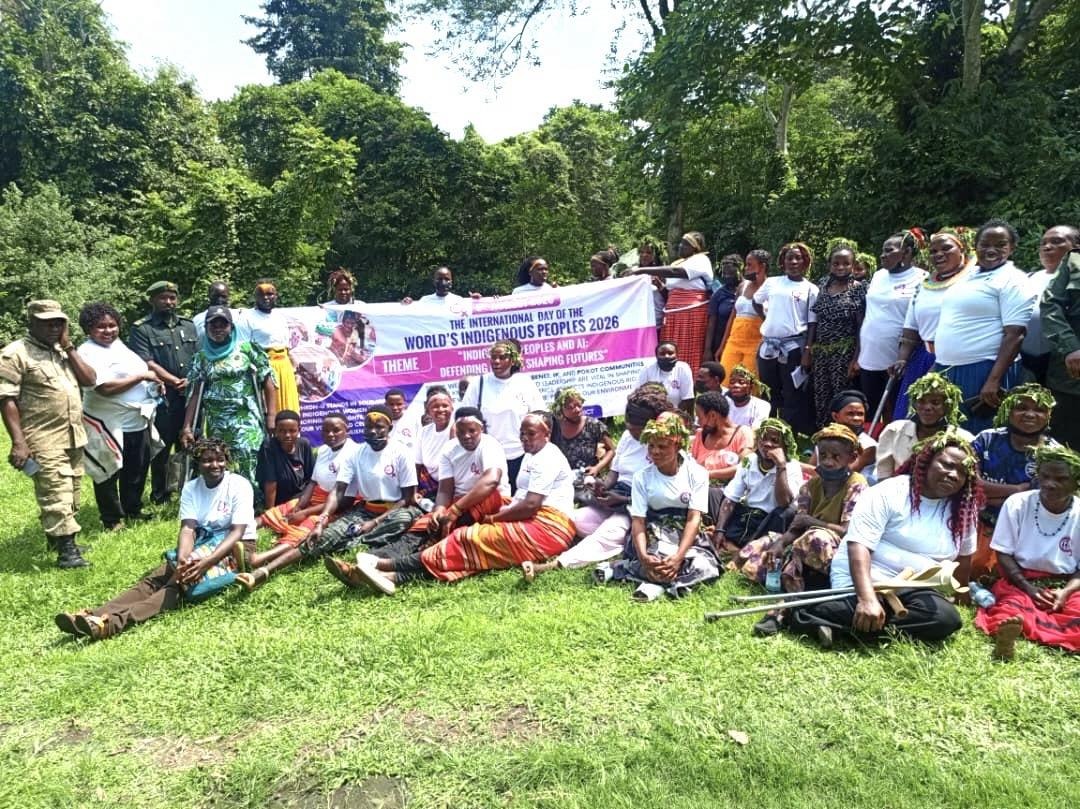
This question took centre stage on 7 August 2026 when the Women Human Rights Defenders Network Uganda (WHRDN-U) brought together 22 representatives of Indigenous communities and women human rights defenders from across Uganda for a commemoration of the International Day of the World’s Indigenous Peoples at the Uganda Wildlife Authority (UWA) offices in Semliki, Bundibugyo. Representatives from the Batwa, Ik, Pokot and Benet communities participated alongside UWA officials. 

The gathering provided more than an opportunity to celebrate Indigenous culture. It created a space for Indigenous women to share experiences and engage directly with UWA on issues affecting their communities.

Opening the engagement, WHRDN-U Team Leader Brenda Kugonza emphasised that recognising Indigenous culture should go beyond commemorating it on a single day. She called for Indigenous knowledge, culture and relationships with nature to be recognised and protected, while ensuring that conservation and the rights and dignity of Indigenous communities are treated as complementary.

The Batwa’s long-standing relationship with forests such as Bwindi and Semliki was central to the discussion. Their stories, language, traditional knowledge and cultural practices, participants noted, can also contribute to conservation, education and tourism.

The strongest moments came as women human rights defenders engaged UWA directly.

Alice Nyamihanda from Kisoro asked about support for Batwa women to document and preserve traditional ecological knowledge. UWA shared that a book documenting Batwa cultural practices, traditional knowledge and herbal medicines had been developed and was awaiting translation into the Lutwa language, subject to the necessary permissions.

The discussion highlighted an important principle: preserving Indigenous knowledge must not mean taking ownership of it. Indigenous communities should have a meaningful say in how their knowledge is documented, represented and shared.

Auma Maureen from Kasese asked whether Batwa women could participate as conservation guides and cultural educators.

While UWA explained that formal qualifications can limit access to some positions, the discussion opened up another possibility: recognising the knowledge Indigenous women already possess as an asset. Their oral histories, understanding of nature and cultural knowledge can provide a valuable foundation for roles in cultural tourism and conservation education.

Viola Kusuro from the Benet community also asked about Indigenous representation in UWA conservation structures, while Mulhambira Dinah from Kasese raised questions about tourism enterprises and whether communities would benefit from tourism and park revenues. 

UWA shared several initiatives aimed at supporting community participation, including livelihood training, provision of 60 beehives to the Batwa on a trial basis, and the Batwa Trail, which provides an opportunity for members of the community to share their history and culture with visitors.

A visitor and exhibition centre was also under construction with support from the World Bank, with plans for it to showcase Batwa cultural materials, crafts and traditional knowledge.

For Indigenous communities, however, participation must mean more than being included in programmes.

It must also involve ownership, decision-making and tangible benefits from opportunities connected to their culture and natural heritage.

This was reflected in discussions around proposals for tourism and park revenue to benefit the Batwa community and the need to ensure that Indigenous people have a meaningful role in determining how their culture is presented to visitors.

Bringing together representatives of the Batwa, Benet, Ik and Pokot communities also created an opportunity to recognise shared concerns around cultural preservation, livelihoods, participation and access to opportunities.

For the women human rights defenders involved, the engagement strengthened connections between Indigenous communities and created a foundation for continued learning and collective advocacy.

WHRDN-U will continue engaging UWA on issues raised during the meeting, including opportunities for Indigenous participation in tourism and conservation and proposed revenue-sharing arrangements. The Network will also strengthen connections among Indigenous women defenders from the different communities. 

The gathering offered a simple but important reminder: Indigenous women should not only be represented in conversations about their communities they should help shape those conversations.

Their knowledge, culture and leadership are not obstacles to conservation. They are part of what makes conservation meaningful and sustainable.

FROM SILENCE TO SPEAKING UP: BATWA WOMEN HUMAN RIGHTS DEFENDERS STRENGTHEN THEIR VOICES IN BUNDIBUGYO

Bundibugyo District | 5–6 August 2026

For women human rights defenders, speaking up about violations can be difficult. For Batwa women facing discrimination because of their identity, accessing services, opportunities and justice can bring additional challenges.

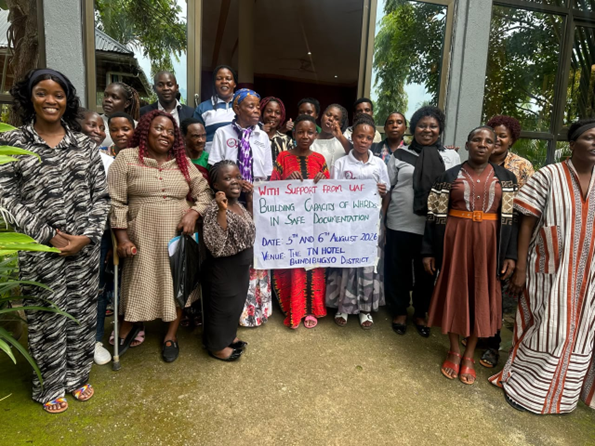
Creating a safe space to speak, learn and build solidarity was at the heart of a two-day regional meeting convened by the Women Human Rights Defenders Network Uganda (WHRDN-U) in Bundibugyo on 5–6 August 2026.

The meeting brought together 20 women human rights defenders from Bundibugyo, Kasese, Kabale, Kisoro and Kabarole to strengthen their skills in documenting and reporting human rights violations, while building connections with local support structures. 

The meeting opened with an opportunity for participants to reflect on what they were bringing into the space and what they hoped to gain. They spoke of care, friendship, solidarity and a willingness to share experiences.

These values shaped the discussions that followed, particularly as Batwa women shared experiences of discrimination in accessing healthcare, education and other opportunities.

The meeting also brought together women defenders working on issues including gender-based violence, disability rights, child rights and sexual rights, broadening the conversation around the different forms of exclusion women may face.

On the second day, Batwa women human rights defenders shared personal experiences of discrimination in health facilities.

Edreda, one of the participants, described feeling that Batwa patients were treated differently, saying: “Doctors work on those with money, they pass us even when we came in first, they say we smell.”

Annet Mutwa also shared an experience in which she said her brother was denied treatment because of their Batwa identity.

Participants noted that these experiences demonstrate that access to healthcare is not only about having services available. It is also about being treated with dignity and without discrimination.

They called for greater attention to culturally appropriate health information and suggested the involvement of Batwa Village Health Teams who understand the community and can help bridge gaps in access and communication. 

The meeting also created an opportunity for direct engagement between women human rights defenders and local government.

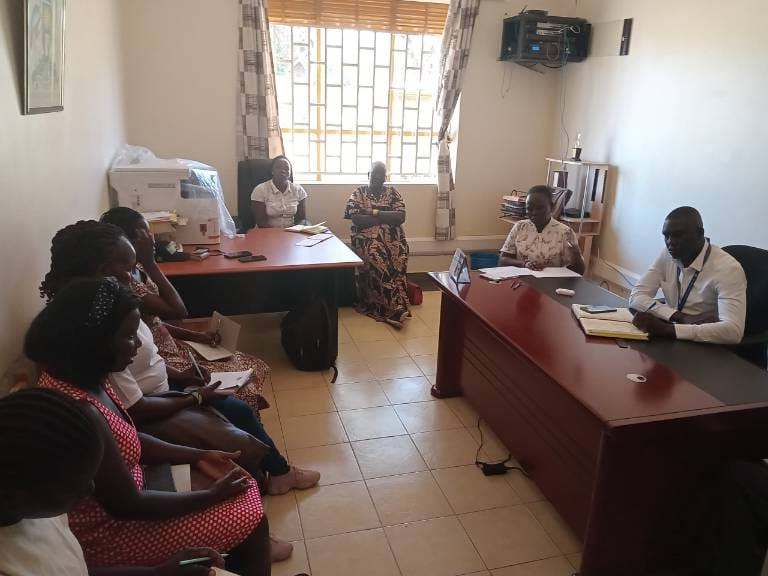
Mr. Baguma Robert, Clerk to Council and Gender Focal Person at the Bundibugyo District Community Development Office, recognised the work of women defenders and encouraged them to continue reporting violations so that relevant authorities can follow up.

He also highlighted existing opportunities for the Batwa community to engage with the Uganda Wildlife Authority and encouraged continued collaboration between communities, government structures and human rights defenders.

For WHRDN-U, such connections are important in ensuring that women defenders know where to seek support and that concerns raised at community level can reach relevant duty bearers.

A key message throughout the meeting was the importance of early documentation and reporting.

Kimpaye Kellen, a Batwa woman human rights defender from Kisoro, shared experiences similar to those raised by women in Bundibugyo and encouraged them to speak up.

Participants were reminded that documenting violations can help ensure that cases are followed up and that patterns of discrimination and other abuses are not left invisible.

The meeting also identified 17 additional active women human rights defenders across the region for further engagement, including defenders working with communities experiencing multiple forms of marginalisation. 

The meeting concluded with practical steps to sustain the connections established.

WHRDN-U and regional defenders agreed to continue creating safe spaces for peer learning and strengthen women’s capacity to document and respond to violations early. Plans were also made for quarterly mentorship of Batwa women defenders in Bundibugyo and an exchange visit to Kisoro to strengthen learning and collaboration.

Participants also committed to identifying defenders experiencing multiple forms of discrimination and connecting them to appropriate support and networks. 

The Bundibugyo meeting demonstrated that protection begins with creating spaces where women feel safe enough to speak and ensuring that those voices can lead to action.

For Batwa women human rights defenders, building that confidence, strengthening their connections and ensuring that their experiences are heard are important steps towards a more inclusive and responsive human rights movement.

STRENGTHENING LEGAL AWARENESS AMONG WOMEN HUMAN RIGHTS DEFENDERS

13 July 2026 | Arch Apartments and Hotel, Ntinda

For women human rights defenders and civil society organisations, understanding the legal environment in which they operate is increasingly important. Knowing their obligations can help organisations identify risks, strengthen internal systems and continue their work responsibly.

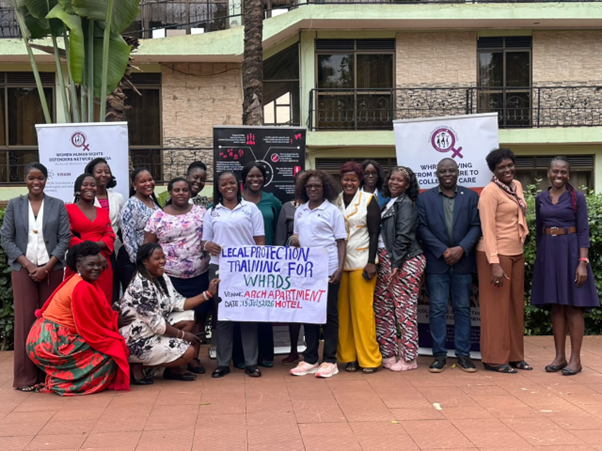
On 13 July 2026, the Women Human Rights Defenders Network Uganda (WHRDN-U) brought together staff, women human rights defenders and civil society representatives for a legal awareness and capacity-building training at Arch Apartments and Hotel in Ntinda. The training focused on the Protection of Sovereignty Act, 2026, organisational compliance and tax obligations. It was facilitated by legal expert and Chapter Four Uganda Executive Director Anthony Masake. 

Participants explored key provisions of the Protection of Sovereignty Act, including registration requirements, regulated activities and other obligations that may affect civil society organisations.

The discussion also considered how the law intersects with everyday organisational work, including advocacy, community mobilisation, partnerships and public communication.

Participants were encouraged to go beyond simply maintaining valid registration documents and review their organisational materials including governing documents, websites, strategic plans and communication materials to ensure they accurately reflect their mandates and current legal requirements. 

For Rose Kahunde, a woman human rights defender from Kasese, the changing environment is already creating concern. “I am worried, I thought that CSOs are safe, in my district, NGO bureau has started asking for registration licenses, investigating organizations on what they do.”

Her concern reflected a broader need for organisations to understand their obligations and seek appropriate guidance rather than operate from uncertainty.

The training encouraged participants to see compliance as an ongoing organisational responsibility rather than something addressed only when problems arise.

Robina, a woman human rights defender from Hoima, said the training had prompted her to reconsider her organisation’s documents:

Participants were also encouraged to establish clear internal processes for responding to requests for information from regulators and to seek legal guidance where necessary.

The discussion reinforced a simple message: being legally prepared requires more than having documents—it requires organisations to understand how their work, systems and communication fit within the applicable legal framework.

The training also addressed tax compliance, including tax exemption applications, filing requirements, PAYE, withholding tax and taxation of unrelated business income.

Participants were reminded that NGO registration does not automatically remove all tax obligations and that organisations need to maintain accurate financial and statutory records.

Emily from Arua shared an example of an organisation that had failed to meet its filing obligations and subsequently had to change its name. “They had to rebrand to another name yet they had received funding to implement a project.”

The experience highlighted how seemingly administrative gaps can affect organisational continuity and public trust. 

Importantly, the training did not present compliance as giving up advocacy.

Instead, participants were encouraged to understand the rules governing their work, identify potential risks and take informed steps to remain operational and effective.

As one of the key messages from the training put it: “Compliance is not surrender.”

WHRDN-U will continue linking defenders requiring additional support to appropriate legal guidance, while participants committed to reviewing their organisational systems, strengthening statutory compliance and sharing the knowledge gained with other organisations and defenders in their communities. 

For Jackie, a woman human rights defender from Yumbe, that commitment extends beyond the training room:

“I will map all sister organizations in the district and give them the important information I have received so that they do not risk closure.”

The training ultimately demonstrated that legal awareness can be an important part of organisational resilience. For women human rights defenders and the organisations supporting them, being informed, prepared and compliant can help create the space needed to continue advancing human rights and supporting communities.

STANDING UP FOR SURVIVORS: BUILDING SAFETY AND SOLIDARITY AMONG GBV RESPONDERS

25 June 2026 | Arch Apartments and Hotel, Ntinda

For women working at the frontline of gender-based violence (GBV), supporting survivors can sometimes come at a personal cost. Responders may face intimidation, threats, stigma and violence simply for speaking up for another woman.

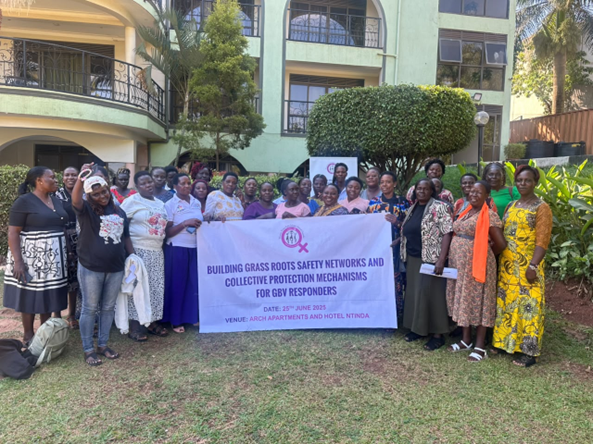
On 25 June 2026, the Women Human Rights Defenders Network Uganda (WHRDN-U) brought together 30 GBV responders from different parts of Uganda for a one-day training focused on building grassroots safety networks and collective protection mechanisms. The engagement also introduced participants to WHRDN-U and its work to protect and support women human rights defenders. 

The meeting created space for participants to share experiences and reflect on the risks associated with GBV response and advocacy.

Juliet from Palisa spoke about facing intimidation from members of her own family after defending her brother’s widow, who was at risk of losing her marital home.

Biira from Kasese shared how she was threatened after advocating for a 14-year-old girl with a disability who had become pregnant. Anna from Tororo also described being evicted from her home after supporting a tenant experiencing sexual harassment.

Their experiences highlighted that GBV responders can face hostility not only from perpetrators, but also from family and community members who view their advocacy as interference.

Paulina, a woman human rights defender from Amudat, shared one of the most powerful testimonies of the day.

An advocate against child marriage and female genital mutilation (FGM), Paulina said members of her community killed her cattle after she provided shelter to girls who had escaped FGM and forced child marriage.

The loss affected both her livelihood and her ability to continue supporting the girls.

“The Network supported me with one cow after the community ganged against me and killed all my cattle because I was protecting girls who had run away from FGM and child marriage.”

The cow has since produced two more, helping her rebuild her livelihood.

“I am very grateful to the Network because that support helped me rebuild my livelihood while continuing my work.”

Her experience demonstrated that protection for human rights defenders can sometimes require more than responding to immediate threats. It can also mean helping defenders recover from retaliation so they can continue their work. 

Participants explored practical ways of supporting survivors and responding to threats against defenders, including referrals, counselling, case management and connections to relevant protection services.

The discussions also emphasised the importance of both online and offline security, self-care and collective care.

For many participants, one of the most valuable outcomes was the opportunity to connect with other women doing similar work. Several described leaving with a new “sister” they could remain connected to and support beyond the training.

This sense of connection is central to the grassroots safety networks WHRDN-U is seeking to strengthen networks where defenders can share information, make referrals and respond collectively when someone faces a threat.

WHRDN-U will continue engaging the responders through mentorship, regional meetings and networking opportunities, while a follow-up training will focus on mapping community support structures, strengthening referral pathways and developing collective protection mechanisms.

Participants committed to continuing their GBV response work, documenting violations, maintaining communication with fellow defenders and referring other defenders to WHRDN-U where support is needed. Two cases involving threats and violations against women defenders from Palisa and Kasese were also documented during the engagement. 

The meeting marked an important first step in connecting grassroots GBV responders to a wider protection network.

Because the women who stand up for survivors should not have to stand alone.

DEFENDING RIGHTS IN A SHRINKING CIVIC SPACE: WOMEN HUMAN RIGHTS DEFENDERS’ VOICES FROM UGANDA’S 2026 UPR CONSULTATION

By the Women Human Rights Defenders Network Uganda (WHRDN-U) | Brenda Kugonza

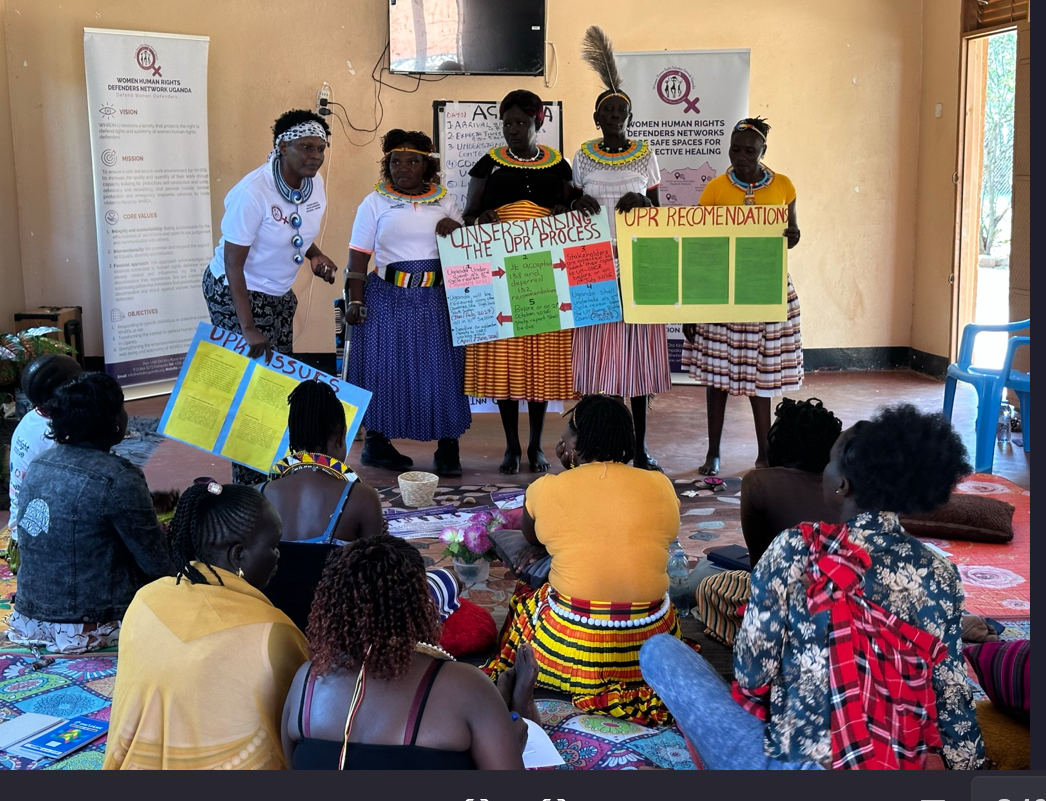
As Uganda prepares for its Fourth Cycle Universal Periodic Review (UPR) before the United Nations Human Rights Council scheduled for January to February 2027, the Women Human Rights Defenders Network Uganda (WHRDN-U) undertook a nationwide consultative process to ensure that the lived experiences, priorities, and protection concerns of women human rights defenders are fully reflected in the country’s national reporting and advocacy agenda. The consultation comes at a critical moment, as stakeholder submissions for the 2027 UPR cycle are due in July 2026, making it urgent to ensure that grassroots voices meaningfully shape Uganda’s human rights accountability commitments.

Uganda’s previous UPR review in 2021 resulted in the acceptance of 138 recommendations and the noting of 132 recommendations. While this reflects continued engagement with the international human rights system, women human rights defenders emphasized that gaps remain in implementation and in the protection of those working at the frontline of human rights defense. It is against this background that WHRDN-U initiated a structured consultation process between March and June 2026, reaching more than 60 women human rights defenders across different regions of the country.

The purpose of the consultation was to document and elevate the voices of women human rights defenders in order to inform Uganda’s UPR reporting process and strengthen advocacy for improved protection mechanisms. The process specifically sought to generate evidence-based insights on the protection environment for women defenders, including progress made since the last UPR cycle, emerging risks, and practical recommendations for strengthening legal, institutional, and community-based protection systems.

The consultation brought together a diverse group of women human rights defenders, including those working on environmental and land rights, gender-based violence response, anti-FGM advocacy, Indigenous women defenders from the Batwa and Benet communities, women defenders with disabilities, structurally silenced women defenders, and those operating in rural and remote areas. This diversity ensured that the consultation captured intersecting realities of risk, exclusion, and resilience across different identities and movements.

The consultations were conducted through participatory dialogue sessions designed to create safe and inclusive spaces for reflection and experience sharing. Women defenders collectively reviewed Uganda’s progress under the previous UPR cycle and discussed current protection challenges, barriers to civic space, and priority areas for reform. The process also enabled deeper analysis of how legal, political, social, economic, and digital environments are shaping the safety and work of women human rights defenders.

The findings revealed a persistent gap between Uganda’s legal and policy commitments and the lived realities of women human rights defenders. While Uganda has enacted important legal frameworks such as the Constitution of 1995, the Domestic Violence Act of 2010, the Prohibition of Female Genital Mutilation Act of 2010, and the Prevention and Prohibition of Torture Act of 2012, participants consistently reported that implementation remains weak and uneven, particularly in rural and high-risk contexts.

Women defenders working on female genital mutilation reported continued resistance rooted in cultural norms, which exposes both activists and survivors to threats, retaliation, and social exclusion. Despite the existence of the FGM law, enforcement challenges remain a serious concern, especially in border communities where cross-border practices persist.

Defenders working on gender-based violence highlighted ongoing risks including intimidation by perpetrators, interference in justice processes, stigma against survivors, and increasing forms of technology-facilitated violence. Online harassment, surveillance, and coordinated digital attacks were identified as growing threats that disproportionately target women activists and restrict their participation in public life.

Environmental and land rights defenders described experiences of criminalization, arbitrary arrest, detention, surveillance, and judicial harassment. Their work is often wrongly framed as anti-development, exposing them to public hostility and institutional pressure. Many also reported gender-specific risks such as sexual harassment, intimidation, and community stigmatization linked to their activism.

Indigenous women human rights defenders from the Batwa and Benet communities highlighted structural exclusion rooted in historical land dispossession, poverty, and geographic isolation. These intersecting inequalities continue to limit their access to protection services, justice systems, and meaningful participation in decision-making processes.

Women human rights defenders with disabilities reported systemic barriers including inaccessible institutions, exclusion from consultations, and lack of reasonable accommodation. They emphasized that disability rights issues remain underrepresented in national human rights discussions, further deepening their marginalization.

A particularly concerning finding was the situation of structurally silenced defenders, who face multiple and overlapping forms of violence including arbitrary arrest, surveillance, blackmail, eviction, and denial of essential services. Many reported self-censorships due to fear of reprisals, while organizations supporting marginalized communities face increasing operational and financial restrictions.

Defenders working in suspended civil society organizations reported severe socio-economic and psychological impacts, including loss of livelihoods, disruption of essential services, and increased vulnerability for communities that rely on their support systems. Electoral period-related risks were also highlighted, with defenders involved in civic education and election monitoring reporting harassment, arrests, intimidation, misinformation, and gendered attacks designed to discredit their work.

Despite these challenges, the consultation created a strong platform for solidarity and collective reflection among women human rights defenders. It strengthened shared understanding of cross-cutting risks, particularly those related to gender-based violence, digital safety, and shrinking civic space, while also generating a consolidated evidence base to inform Uganda’s UPR stakeholder submission.

The consultation further produced key recommendations aimed at strengthening protection for women human rights defenders. Participants called on the Government of Uganda to end arbitrary arrests, detention, intimidation, and judicial harassment linked to legitimate human rights work. They also urged the establishment of a dedicated, gender-responsive national protection mechanism for human rights defenders that addresses both physical and digital threats.

Strong emphasis was placed on the need to fully enforce existing laws, including those addressing domestic violence, FGM, and torture, while also strengthening national responses to technology-facilitated gender-based violence. Participants further called for the protection of freedoms of expression, association, and peaceful assembly, particularly during electoral periods, and for the removal of undue restrictions on civil society organizations.

The consultation also highlighted the need for targeted protection measures for Indigenous women defenders, women with disabilities, and other structurally marginalized groups to ensure their meaningful participation in national governance processes. Participants further called for improved access to justice, healthcare, housing, and essential services in safe and non-discriminatory environments.

In addition, women human rights defenders recommended the enactment of a gender-sensitive Human Rights Defenders Protection Law that explicitly recognizes women defenders and responds to their specific risks. They also urged Uganda to ratify the Optional Protocol to CEDAW to strengthen accountability mechanisms for women’s rights violations and to ensure meaningful inclusion of women human rights defenders in ongoing policy reforms, including the revision of the National Gender Policy.

In conclusion, the consultation confirms that women human rights defenders in Uganda continue to play a vital role in advancing justice, accountability, and community empowerment despite operating in increasingly restrictive environments. While Uganda has made important legal and policy commitments, significant gaps in enforcement and protection remain. The experiences and recommendations shared through this process provide critical evidence for strengthening Uganda’s 4th Cycle UPR engagement and advancing a safer, more enabling environment for women human rights defenders across the country.

WOMEN ENVIRONMENTAL DEFENDERS UNITE FOR WORLD ENVIRONMENT DAY 2026

June 5, 2026 Bethany Land Institute, Luweero

On World Environment Day 2026, the Women Human Rights Defenders Network Uganda (WHRDN-U) brought together 11 Women Environmental Human Rights Defenders (WEHRDs) and five “Agroforestry Power Ladies” for a powerful learning and exchange visit at Bethany Land Institute (BLI) in Luweero District. Held under the global theme “Inspired by Nature, for Climate, for Our Future,” the commemoration highlighted the vital role of women in advancing environmental justice, climate resilience, and sustainable livelihoods.

The event was more than a commemoration it was a reminder of the central role women play in protecting ecosystems and advocating for climate action. Through interactive discussions, practical demonstrations, and a guided study tour of BLI’s learning centers, participants explored innovative approaches to:

  • Regenerative agroforestry and ecosystem restoration
  • Waste management and recycling
  • Organic farming and soil health
  • Biodiversity conservation and forest protection
  • Indigenous knowledge and herbal medicine

Brenda Kugonza, Team Leader of WHRDN-U, emphasized the importance of solidarity and experience sharing among defenders, while BLI Principal Mr. Kule Sylvester urged participants to honor nature by adopting environmentally friendly practices such as organic farming, tree planting, and ecosystem restoration.

Participants toured BLI’s three learning centers—Lazarus Forest, Mary’s School, and Martha’s Market—gaining practical insights into sustainable farming and conservation. Highlights included:

  • Mary’s Demonstration Farm: Creative recycling using plastic bottles for soil conservation and garden structures.
  • Soil Management Section: Composting, organic fertilizers, and natural pest repellents like wild sunflower and garlic.
  • Black Soldier Fly Unit: Circular farming innovations where larvae serve as protein-rich poultry feed.
  • Artificial Wetland System: Nature-based water purification for reuse.
  • Regenerative Agroforestry Models: Integrating crops, trees, and livestock for resilient food systems.
  • Self-Care & Herbal Medicine: Exploring indigenous remedies such as Aloe Vera and Indian Pennywort.
  • Lazarus Forest Walk: A 300-acre conservation area showcasing biodiversity and the importance of forest ecosystems.

Women defenders shared inspiring testimonies of their work across Uganda:

  • Annet (Buikwe): Mobilized communities against industrial water pollution.
  • Shamim (Kasese): Advocated for climate education in schools for children with disabilities.
  • Sharon (Girls for Climate Action): Supported women in eco-friendly enterprises like reusable sanitary pads.
  • Constance (Tororo): Introduced tree planting traditions, including planting a tree for every child born.
  • Elizabeth (Kikuube): Fought for women’s inclusion in sugarcane farming despite threats and backlash.

The commemoration strengthened participants’ knowledge and commitment to:

  • Replicating regenerative agroforestry and organic farming practices.
  • Promoting waste recycling and sustainable livelihoods.
  • Preserving indigenous knowledge and herbal medicine.
  • Expanding tree planting and forest conservation initiatives.
  • Building solidarity and peer learning networks among defenders.

Participants called for:

  • Continued protection and wellness support for women defenders.
  • More exchange visits and peer learning opportunities.
  • Training on safe advocacy and security practices.
  • Creation of safe spaces for reflection, healing, and self-care.
  • Stronger referral systems for defenders facing threats and violence.

 This commemoration at Bethany Land Institute was a testament to the resilience, creativity, and leadership of women environmental defenders. By embracing nature-based solutions and strengthening solidarity, they continue to safeguard Uganda’s environment for present and future generations.

STRENGTHENING WOMEN HUMAN RIGHTS DEFENDERS IN KARAMOJA: REGIONAL MEETING IN AMUDAT DISTRICT

May 21–22, 2026 – Amudat District, Karamoja Region

Women Human Rights Defenders (WHRDs) across Uganda continue to face serious threats including physical attacks, arbitrary arrests, domestic violence, and online harassment. To strengthen their resilience and practical skills in safe documentation and reporting, the Women Human Rights Defenders Network Uganda (WHRDN-U) convened a two-day regional meeting in Amudat District, bringing together 16 WHRDs from Kaabong, Moroto, Tapak Sogdek-Moroto, IK Land, Amudat, Nakapiripirit, Karita, and Napak districts.

Brenda Kugonza, Team Leader of WHRDN-U, reminded participants that WHRDs are frontline women fighting for human rights despite attacks from both state and non-state actors. She emphasized the importance of solidarity and partnerships with local government, welcoming Suzan Chuwai, Senior Assistant Secretary and survivor of FGM, who highlighted the need for women defenders to support each other in the face of gender-based abuse and cyberbullying.

Through group discussions, participants reflected on the types of violations they face:

  • Attacks on life: Threats, domestic violence, and community isolation.
  • Domestic violence and cultural discrimination: Physical assaults, sexual harassment, land grabbing, and harmful cultural norms.
  • Arbitrary detention and sidelining: Cases ignored or mishandled by authorities.
  • Verbal and online abuse: Hate speech, doxing, fake rumors, and intimidation.

The session underscored the importance of documenting violations, both online and offline, to ensure accountability and protection.

Participants engaged in practical case scenarios to distinguish between eligible, non-eligible, and fabricated cases. They learned the value of evidence, verification, and ethical assessment, as well as the need to document digital violations with screenshots, links, and police references.

On the second day, WHRDs visited Lukales Gold Mining Site in Karita, where Christine, chairperson of the Kyangaliya Women Group, shared her advocacy journey against harmful mining practices. Despite threats and attempts to silence her, Christine’s documentation and digital advocacy led to government intervention and eventual closure of the company. Her resilience inspired fellow defenders and highlighted the power of safe advocacy and digital tools in amplifying community voices.

  • WHRDs must continue documenting violations and strengthening digital security.
  • Partnerships with local government and commissions such as the Equal Opportunities Commission are vital.
  • Training in safe advocacy and digital tools remains a priority to empower women defenders.

The meeting successfully built solidarity among WHRDs, enhanced their knowledge on violations, and strengthened their documentation skills. However, cultural norms and fear of isolation remain significant barriers, with many violations still going undocumented.

STRENGTHENING SAFETY AND SOLIDARITY: WOMEN LEADERS GATHER IN KAMPALA

April 29–30, 2026 | Protea Skyz Hotel Kampala

Twenty women leaders from structurally silenced organizations came together at Protea Skyz Hotel in Kampala for a two-day residential gathering organized by the Women Human Rights Defenders Network-Uganda (WHRDN-U). The convening created a vital space for safety, solidarity, and resilience-building among women human rights defenders (WHRDs) who often face isolation, legal threats, and community backlash.

The gathering was designed to:

  • Enhance practical understanding of how current laws are applied in Uganda.
  • Support women leaders to adopt safer daily work practices.
  • Reduce isolation through peer connection and solidarity.
  • Strengthen inclusive protections within the WHRDN-U network.

As one participant expressed, “This gathering is a space of connection, a place to reflect on safety and protection mechanisms, and to recognize the power within.”

  • Understanding the Law: Facilitators highlighted the challenges of Uganda’s legal environment, where compliance requirements often target civil society organizations. Litigation was discussed as a tool for change, though participants noted that court decisions frequently remain unimplemented.
  • Safety Strategies: WHRDs shared practical approaches to staying safe, including choosing advocacy spaces strategically, collaborating across regions, and leveraging collective action. “It’s better to be a living WHRD than a dead one,” one reminder emphasized.
  • UPR Consultations: Participants identified pressing issues such as restrictions on freedom of association, digital surveillance, economic insecurity, and cultural stigma. Recommendations included strengthening legal frameworks, ensuring inclusive participation, and restoring access to financial resources for NGOs.
  • Experience-Based Panel: Leaders shared survival strategies such as rebranding organizations, building cross-movement partnerships, promoting social enterprise, and minimizing office-based risks.

Beyond technical sessions, the gathering emphasized self-care, gratitude, and solidarity. Dancing and reflection exercises symbolized resilience and the determination to “shake off whatever structure or form limits women’s progress.”

The gathering concluded with practical opportunities for continued support, including access to legal expertise, counselling, and digital resources. Most importantly, it reaffirmed the collective strength of WHRDs in Uganda.

This event was more than a meeting, it was a declaration of resilience, a reminder that even in silenced spaces, women leaders continue to stand strong, protect one another, and push forward for justice.