By Brenda Kugonza
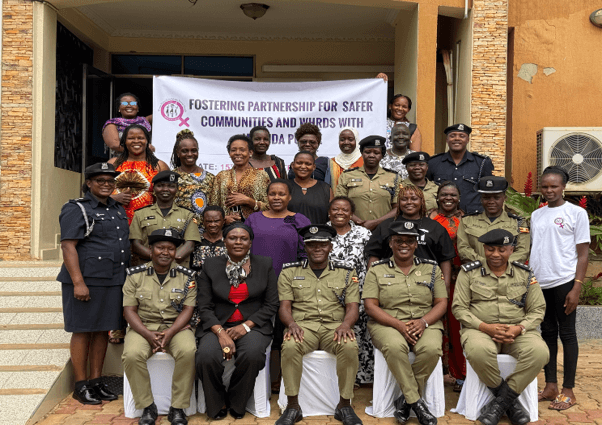
In Uganda today, women human rights defenders (WHRDs) remain at the frontline of justice, solidarity, and protection. Their work is vital, yet fraught with risks, from intimidation and violence to digital harassment. Strengthening their relationship with law enforcement is not just desirable; it is essential. This truth was brought to life during a two-day engagement between the Women Human Rights Defenders Network Uganda (WHRDN-U) and the Uganda Police Force, held on September 15–16, 2026, at Unik Hotel Limited.
Day One: Direct Access to Police Leadership
The first day offered WHRDs a rare opportunity to interact directly with Commissioner Anatoli Mulekerwa, Head of the Community Policing Directorate. For many defenders, this was more than a meeting, it was a breakthrough.
Commissioner Mulekerwa guided participants through the Police’s structure and mandate, clarifying referral pathways and responsibilities across regional and district levels. This knowledge proved invaluable, as WHRDs often struggle to identify the right offices to approach when reporting violations.
More importantly, the day produced immediate results. Several WHRDs raised pressing cases, and the Commissioner facilitated direct linkages with district officers. From Bundibugyo to Amudat, defenders left the meeting with concrete contacts to follow up on cases of sexual violence, land disputes, and harmful practices such as FGM.

Day Two: Practical Dialogue with Police Departments
The second day deepened the engagement, bringing together 15 WHRDs and 10 Police officers from key departments, including Child and Family Protection, Legal and Human Rights, Women Affairs, and Criminal Investigations.
This session was not about theory, it was about lived realities. WHRDs raised concerns ranging from gender-based violence and digital harassment to accessibility barriers for women with disabilities. One defender highlighted the lack of sign language interpretation at Police stations, while another questioned how cyberattacks via WhatsApp and email could be reported. Police officers responded with clarifications, acknowledging gaps and proposing practical solutions, such as specialized cybercrime awareness sessions.
The dialogue revealed both challenges and opportunities. While WHRDs need clearer information on case follow-up and referral processes, Police officers encouraged defenders to establish professional relationships at district and sub-county levels. This shift from national to community engagement could prove transformative.
A Foundation for Continued Cooperation
By the close of the two days, the engagement had achieved more than dialogue it had built trust. WHRDs gained direct contacts, clearer knowledge of Police structures, and a stronger sense of how to navigate the justice system. Police officers, in turn, gained firsthand insight into the risks and realities WHRDs face daily.
The outcomes point to a practical path forward:
- Designating Police focal persons for WHRDs.
- Developing a referral directory to simplify access.
- Organizing district-level engagements to extend cooperation to grassroots communities.
- Addressing accessibility barriers, including sign language interpretation.
- Drafting a memorandum of understanding to formalize collaboration.
This engagement was not a symbolic gesture, it was a necessary step toward bridging a gap that has long undermined access to justice for women defenders. For WHRDN-U, the lesson is clear: protection does not require parallel systems outside the Police. Instead, it requires strengthening existing structures, ensuring defenders know where to go, whom to contact, and how to follow up.
In a climate where WHRDs face intimidation, violence, and digital threats, these two days demonstrated that cooperation is possible and urgently needed. The challenge now lies in sustaining this momentum, translating dialogue into action, and ensuring that defenders across Uganda can rely on the Police not as distant institutions, but as partners in justice.