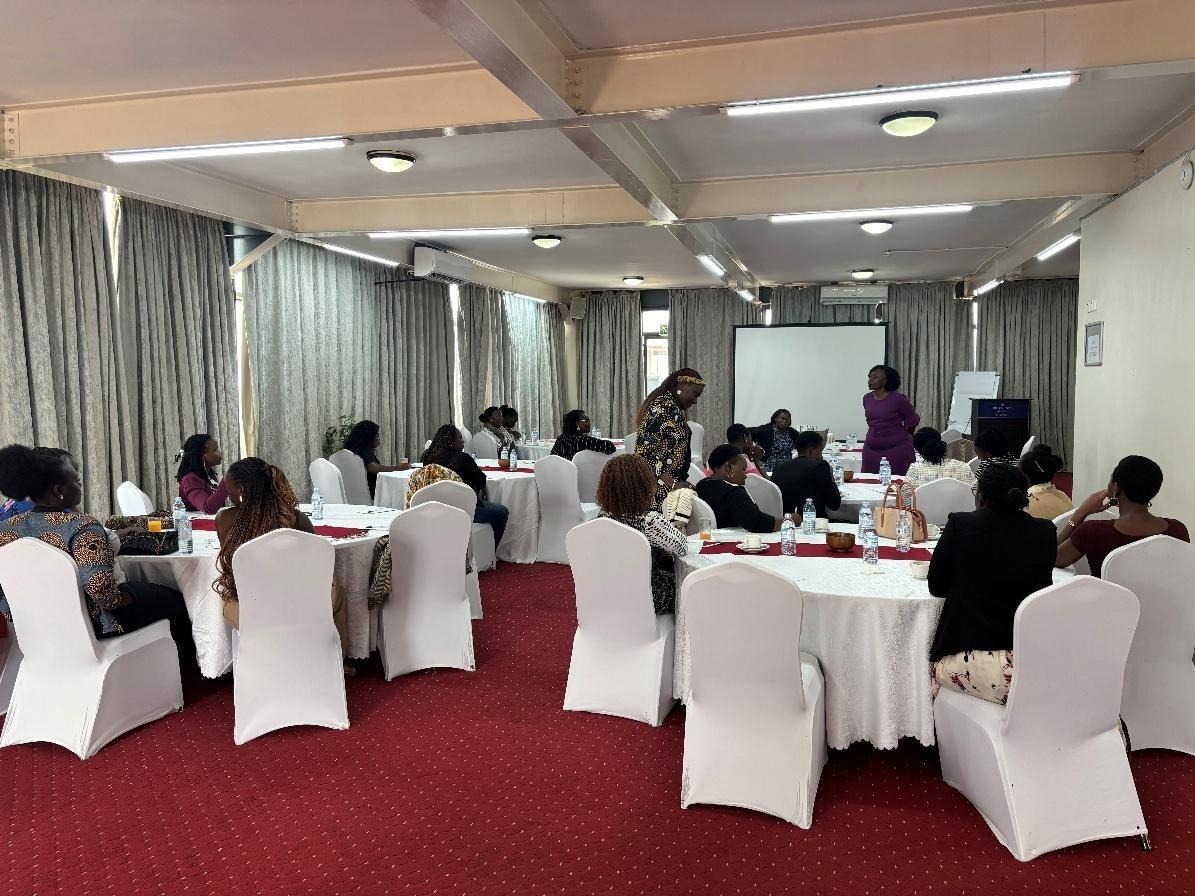
23 February 2026 | Protea Skyz Hotel, Naguru, Kampala
When a civil society organisation is suspended, the impact goes beyond closing an office or interrupting programmes. For the women human rights defenders working within these organisations, it can mean uncertainty about livelihoods, family responsibilities, personal safety and their ability to continue serving their communities.
On 23 February 2026, the Women Human Rights Defenders Network Uganda (WHRDN-U) brought together 25 women human rights defenders affected by organisational suspensions for a day of reflection, psychosocial support and solidarity at Protea Skyz Hotel in Naguru, Kampala.
A Space to Speak About What Had Changed
The meeting created a safe space for participants to openly reflect on the challenges they were experiencing and consider how they could navigate the uncertainty together.
For some, the suspensions had affected their ability to continue their education or meet family responsibilities. Others spoke about the emotional strain of losing employment or living with uncertainty about what would come next.
As facilitator Sheila Muwanga observed: “Some of us end up feeling alone and our burdens are heavy.”
The statement captured a shared experience among women who had spent much of their professional lives supporting others but were now themselves in need of support.

The Personal Cost of Human Rights Work
Participants also reflected on risks they had experienced because of their human rights work.
Praise Aloikin described living with prolonged fear and having to relocate for safety, while others expressed concern about how the suspension of their organisations could affect their future employment and professional lives.
The discussions highlighted that the challenges facing women human rights defenders do not necessarily end when an organisation stops operating. In some cases, organisational uncertainty can deepen existing vulnerabilities.
For this reason, participants discussed the importance of maintaining trusted networks, knowing where to seek protection and continuing to check in on one another.
Making Wellbeing Part of Protection
Counsellor Ruth from Healing Talking Uganda guided participants through conversations on stress, trauma and coping.
The session encouraged the women to recognise that seeking support is not a sign of weakness and that caring for their own wellbeing is important to sustaining their work.
Participants were also encouraged to identify new skills and explore alternative ways of generating income while navigating the uncertainty.
WHRDN-U provided emergency financial support to some participants to help address immediate needs affecting them and their families.
This combination of psychosocial and practical support reflected a broader understanding of protection, one that recognises that defenders may need emotional, social and economic support alongside traditional security mechanisms.
Finding Strength in Solidarity
Despite the difficult circumstances, participants also spoke about the importance of staying connected.
Women shared how they continued checking on one another through phone calls and WhatsApp and offering support during difficult moments.
For Ritah, the support from WHRDN-U also helped demonstrate to affected families that their mothers were not facing the situation alone.
The meeting ultimately showed that when formal organisational structures are disrupted, relationships and solidarity can become an important source of strength and protection.
WHRDN-U will continue creating spaces where women human rights defenders can access psychosocial support, share experiences and explore practical ways of building resilience.
The experience also offers a simple reminder: the women who spend their lives standing up for others also need spaces where others can stand with them.