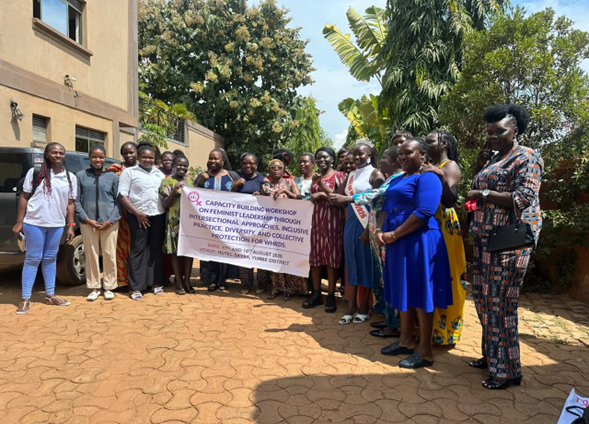
17–18 August 2026 | Yumbe District
What does feminist leadership look like in practice? Who gets to speak, who gets heard, and who gets included when decisions are being made?
These questions shaped a two-day regional training organised by the Women Human Rights Defenders Network Uganda (WHRDN-U) for 25 women human rights defenders from across West Nile on 17–18 August 2026 in Yumbe District.
The training explored feminist leadership, intersectionality and collective protection, while creating space for women defenders to reflect on inclusion, self-care and the different risks they experience because of who they are and the communities they work in.

Leadership That Shares Power
Participants explored feminist leadership through the principles of equity, shared power, inclusion and accountability.
Rather than seeing leadership primarily as authority over others, the discussion focused on creating opportunities, sharing decision-making and ensuring that people whose voices are often overlooked can participate meaningfully.
Participants shared examples from their own organisations, including approaches that rotate responsibilities and create opportunities for women from different organisations to work together.

One message emerged strongly: leadership is not only about holding power, but about using it to create space for others.
“Nothing Without Us”
The conversation became particularly powerful when participants reflected on the principle of “nothing without us.”
Women defenders acknowledged that organisations can sometimes speak on behalf of marginalised groups without sufficiently involving them in decisions that affect their lives.
Mercy, a participant, captured the shift in thinking: “Recently we have also changed from ‘Nothing for us, without us’ to ‘Nothing without us’.”
For participants, meaningful inclusion means more than inviting marginalised people into a room. It means ensuring they have a voice in the decisions, opportunities and platforms that concern them.
Different Women, Different Risks
Participants also explored intersectionality; how different aspects of a person’s identity and circumstances can combine to shape their experiences and risks.
Through practical case studies, they considered the realities of a rural environmental defender, a woman defender with a disability documenting election violence, and a young digital activist facing online harassment.

The discussions showed that women defenders do not experience risk in the same way.
Location, age, disability, economic circumstances, social status and the issues a defender works on can all affect both vulnerability and access to support.
Hadija, a young activist from Moyo, shared her experience of cyberbullying and abusive messages on TikTok, highlighting how online attacks can add another layer of risk for women who speak publicly about human rights.
For participants, the lesson was clear: protection must respond to the individual realities of each defender.
Solidarity as Protection
The training also created space for participants to reflect on self-care and collective care.
Women shared simple ways of supporting their wellbeing, including taking time to rest, walk, connect with colleagues and create space away from the pressures of their work.
But collective care also means checking on one another, sharing information and offering support when a colleague is struggling.

The women reflected on previous experiences where defenders came together to raise awareness and support colleagues facing threats demonstrating how solidarity can become a practical form of protection.
Taking the Learning Forward
Participants committed to strengthening peer support and incorporating self-care into their organisational practices. WHRDN-U will continue providing protection support, creating regional and national learning opportunities and facilitating joint advocacy and networking among defenders.
Plans were also made for a self-care and collective healing session in Adjumani and continued efforts to connect marginalised groups to appropriate support and opportunities.

The Yumbe training offered a broader understanding of what feminist leadership can mean: sharing power, making room for others, recognising different experiences and ensuring that no defender has to navigate challenges alone.
For the women human rights defenders of West Nile, that work begins with something simple but powerful, listening to one another, standing together and making sure every voice has a place.