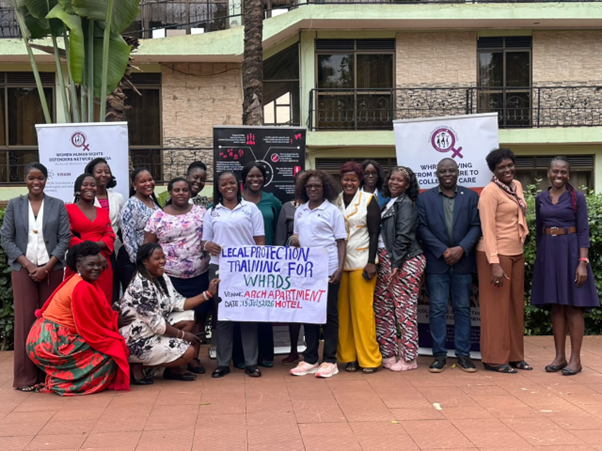
13 July 2026 | Arch Apartments and Hotel, Ntinda
For women human rights defenders and civil society organisations, understanding the legal environment in which they operate is increasingly important. Knowing their obligations can help organisations identify risks, strengthen internal systems and continue their work responsibly.
On 13 July 2026, the Women Human Rights Defenders Network Uganda (WHRDN-U) brought together staff, women human rights defenders and civil society representatives for a legal awareness and capacity-building training at Arch Apartments and Hotel in Ntinda. The training focused on the Protection of Sovereignty Act, 2026, organisational compliance and tax obligations. It was facilitated by legal expert and Chapter Four Uganda Executive Director Anthony Masake.

Understanding a Changing Legal Environment
Participants explored key provisions of the Protection of Sovereignty Act, including registration requirements, regulated activities and other obligations that may affect civil society organisations.
The discussion also considered how the law intersects with everyday organisational work, including advocacy, community mobilisation, partnerships and public communication.

Participants were encouraged to go beyond simply maintaining valid registration documents and review their organisational materials including governing documents, websites, strategic plans and communication materials to ensure they accurately reflect their mandates and current legal requirements.
For Rose Kahunde, a woman human rights defender from Kasese, the changing environment is already creating concern. “I am worried, I thought that CSOs are safe, in my district, NGO bureau has started asking for registration licenses, investigating organizations on what they do.”
Her concern reflected a broader need for organisations to understand their obligations and seek appropriate guidance rather than operate from uncertainty.
From Compliance to Preparedness
The training encouraged participants to see compliance as an ongoing organisational responsibility rather than something addressed only when problems arise.
Robina, a woman human rights defender from Hoima, said the training had prompted her to reconsider her organisation’s documents:
“We need to go back and revise our documents since there might be terms that implicate us. This training was therefore timely and important.”
Participants were also encouraged to establish clear internal processes for responding to requests for information from regulators and to seek legal guidance where necessary.

The discussion reinforced a simple message: being legally prepared requires more than having documents—it requires organisations to understand how their work, systems and communication fit within the applicable legal framework.
Compliance Goes Beyond Registration
The training also addressed tax compliance, including tax exemption applications, filing requirements, PAYE, withholding tax and taxation of unrelated business income.
Participants were reminded that NGO registration does not automatically remove all tax obligations and that organisations need to maintain accurate financial and statutory records.
Emily from Arua shared an example of an organisation that had failed to meet its filing obligations and subsequently had to change its name. “They had to rebrand to another name yet they had received funding to implement a project.”
The experience highlighted how seemingly administrative gaps can affect organisational continuity and public trust.
“Compliance Is Not Surrender”
Importantly, the training did not present compliance as giving up advocacy.
Instead, participants were encouraged to understand the rules governing their work, identify potential risks and take informed steps to remain operational and effective.
As one of the key messages from the training put it: “Compliance is not surrender.”
WHRDN-U will continue linking defenders requiring additional support to appropriate legal guidance, while participants committed to reviewing their organisational systems, strengthening statutory compliance and sharing the knowledge gained with other organisations and defenders in their communities.

For Jackie, a woman human rights defender from Yumbe, that commitment extends beyond the training room:
“I will map all sister organizations in the district and give them the important information I have received so that they do not risk closure.”
The training ultimately demonstrated that legal awareness can be an important part of organisational resilience. For women human rights defenders and the organisations supporting them, being informed, prepared and compliant can help create the space needed to continue advancing human rights and supporting communities.