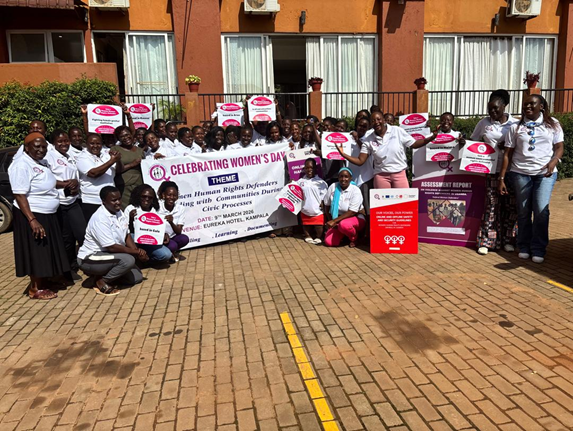
9 March 2026 | Eureka Place Hotel, Ntinda, Kampala
During elections, much of the public attention focuses on candidates, voters and polling stations. Less visible are the women working in communities to promote civic participation, monitor elections, advocate for peaceful processes and document human rights concerns.
Yet these women can also face intimidation and threats because of the work they do.
On 9 March 2026, the Women Human Rights Defenders Network Uganda (WHRDN-U) brought together 25 women human rights defenders from Eastern, Western, Northern, Central and Karamoja regions for a day of reflection, learning and wellness following Uganda’s 2026 elections. The engagement focused on strengthening documentation, collective protection and the wellbeing of women defenders.
Documenting What Happens
The engagement provided space for women defenders to reflect on the rights at stake during elections, including freedom of expression, participation, security, access to information and the right to vote.
Hope Bagota from the Uganda Human Rights Commission (UHRC) led a session on monitoring and documentation, emphasising the importance of recording incidents objectively and supporting them with evidence such as photographs, dates, locations, police reference numbers and relevant media reports.

Participants were introduced to the Five Ws and H what, where, when, who, why and how as a practical framework for documenting violations.
For the defenders, the lesson was clear: documentation can turn individual experiences into credible evidence that supports advocacy and accountability.
When Defenders Become Targets
Participants also shared experiences from the election period that demonstrated the risks associated with their work.
Leese Josephine from Nakapiripirit described facing intimidation while conducting civic and voter education. Amiya Shannon said security agents at a polling station in Moroto forced her to hand over her phone and delete photographs she had taken before she left the station for her safety.
In Yumbe, Eudopia Jackline described receiving a threatening call during a radio talk show on gender equality and peaceful coexistence. In another case shared during the meeting, a woman defender in Arua reportedly faced verbal attacks and gender-based violence at home linked to her civic engagement.

These experiences highlighted a difficult reality: women encouraging others to participate in civic processes can themselves become targets because of their work.
The meeting also resulted in two cases involving WHRDs from Palisa and Kasese being interviewed and documented for WHRDN-U‘s evidence base on attacks and violations.
Wellbeing Is Part of Protection
After reflecting on the risks they had experienced, participants turned their attention to their own wellbeing.
WHRDN-U Executive Director Brenda Kugonza encouraged the women to think about how often they make time for themselves through rest, exercise, health check-ups and other forms of self-care.
A wellness session, including activities such as massage, steam baths and body scrubs, gave participants an opportunity to relax and reconnect after the pressures of election-related work.
The session reinforced an important message: self-care is not separate from human rights work. For defenders regularly exposed to conflict, violence and discrimination, maintaining their physical and emotional wellbeing is part of sustaining their work.
Strengthening Collective Protection
The engagement also strengthened connections among defenders from different parts of the country and provided an opportunity to connect them with the Uganda Human Rights Commission and its regional offices for reporting and complaints.

At the same time, the discussions revealed a need for continued mentorship, as many defenders had not consistently documented eligible cases despite receiving guidance and support.

WHRDN-U will continue supporting defenders to strengthen documentation, collective protection and peer networks, while working with relevant human rights institutions to ensure that violations affecting women defenders are captured in broader accountability processes.
The experiences shared during the engagement offer a simple but important reminder: the women who stand up for the rights of others also need protection, support and space to recover.
Protecting women human rights defenders is therefore part of protecting the civic space in which communities can participate, speak freely and demand accountability.